Thursday, June 28, 2018

Episode Review - Someone to Watch Over Me (Voyager, Season 5)


For those who are new to my episode reviews, you can find the post where I establish my point criteria here.


Overview – Captain Janeway and Tuvok leave on an exchange assignment with a race known as the Kadi, a race that does not value over-stimulation of the senses. Nelix is assigned to host the Kadi ambassador who is responsible to evaluate the Voyager crew. During this exchange, the Doctor takes it upon himself to educate Seven of Nine in the art of romance. The Doctor ends up making a bet with Tom Paris as to her capability to be successful at dating. As he tutors her on the aspects of going on a date, the Doctor comes to realize that he himself is developing feelings for his pupil. Amidst this, the Kadi ambassador turns out to be more than Nelix seems to be prepared for.


Score: 8/10 – This episode is a light-hearted character driven story that taps into some standard motifs of the romantic comedy. We see the awkwardness of the inexperienced individual result in hilarity. There’s the falling in love of the teacher to the student. There is a typical bet that damages the relationship between the two, and an eventual resolution. While this episode does seem to hit the standard notes, it does so in a successful manner. The pacing is a bit rushed at times, and the story is mostly predictable, but it is a delight to watch. Seven’s disastrous date with Lt. Chapman is not too over the top, but still funny. There is some great banter and humor. Scott Thompson, best known for his work in “The Kids in the Hall” sketch show, does a great job as Tomin. He plays the part with flare and passion. It is unfortunate that some of the main characters are glorified extras in this episode. I think Chakotay is only in one scene, and Harry gets very little time as well. Tuvok is only seen at the start and end, with little else to do or say at those moments, and Janeway does not get much more screen time than that. Mostly, we get a great story that really pushes the relationship between the Doctor and Seven of Nine to a different level. Both Robert Picardo and Jeri Ryan sing for this episode, and the duet of “You are my Sunshine” is delightful.


Relevance – 3 points. This is the beginning of the Doctor having romantic feelings for Seven of Nine, so that scores a point. There is also a point for the final appearance of Sandrine’s, the holographic French pub that Tom Paris created. A great line is when Tom comes into the program and loudly wonders what happened to the pool table. There is also a reference as to why Seven refuses a glass of champagne, as in the episode “Timeless” she learned that synthehol has a negative effect on her.


Continuity – 3 points. Universe continuity is intact here. Character continuity is also good, although I found Seven forgiving the Doctor to be a bit quickly done. That is more of an issue with pacing than anything else, so not much I can do to detract from this category. I did find that it made perfect sense for the Doctor to develop feelings for Seven as he worked with her in developing social skills of the romantic nature. Story wise there was one small aspect that bothered me. When Janeway, Tuvok, and Neelix meet the Kadi in the transporter room, it was odd that Chakotay was not present as well. I would think that the first officer, who would be in command of the ship during Tomin’s visit, would be there to great them. Still, I find that to be a minor oversight, and while it deserves a mention, it doesn’t merit a point deduction.


Character Development – 3 points. We see the beginning of the Doctor’s infatuation with Seven in this episode. It is a significant advancement in the Doctor’s character, and it is carried through for almost the remainder of the series. Seven also gets some good attention as we see her expand her skills and interests into more interesting areas. The B story gives us a rare chance to grow Neelix’s character as we see him try to reign in the out-of-control ambassador. We have seen this before in TNG’s “Liasons”, but here we see Neelix’s charm and good heart win through.


Social Commentary – 1 points. Here is where the story comes up a bit short. This is a great character story that deepens the insight into two popular characters. We are given a fun story of futile love (which, come to think of it, might have been a fitting title, a former Borg trying to understand love). But what are they saying here that is truly relevant to us? Is it that love is a fickle game? Perhaps we could examine the Neelix story and come away with how living a sheltered life can become troublesome when you are in an environment where your inhibitions are freed. I suppose that something there is something to that in the story of Tomin. He has lived a very disciplined life and when given the opportunity to explore outside what he is accustomed to. Of course, the results have some hilarity, but it does make one think about the inhibitions we have. Still, most in our society do not have the level of restrictions that Kadi have, so this will give us just one point in this section.


Cool Stuff – 2 points. I loved the performance by Scott Thompson. He is a gifted comedic actor that really knows how to pull off an over-the-top character, and the suddenly unrestrained Tomin certainly qualifies. I am also scoring a point for the lovely singing that Seven and the Doctor engage in. It added a great sense of charm and sweetness to the episode.


Rank – Captain (20 points). This is such a fun and charming episode that does a great deal of justice to Seven’s and the Doctor’s relationship that it is just too good to pass up. While it lacks in the action and intrigue department, it more than makes up for it in the characterization, humor, and fun. Well worth multiple viewings.


If you would like to read other reviews from Star Trek: Voyager, click on the link here.


If you would like to read an episode review from any of the Trek series, click the following link to get to the series catalog. If the episode you want reviewed has not been done yet, then feel free to request it in the comments and I will see what I can do.

Tuesday, June 19, 2018

Episode Review - Up the Long Ladder (Next Generation, Season 2)


For those who are new to my episode reviews, you can find the post where I establish my point criteria here.


Overview – The Enterprise receives an ancient distress call from an unknown colony of humans and is sent to rescue them. They also discover a second colony from the same ancestral group as the first, who have taken a very different course of development and are now a colony of clones who hope that the crew of the Enterprise could help them restock their gene pool.


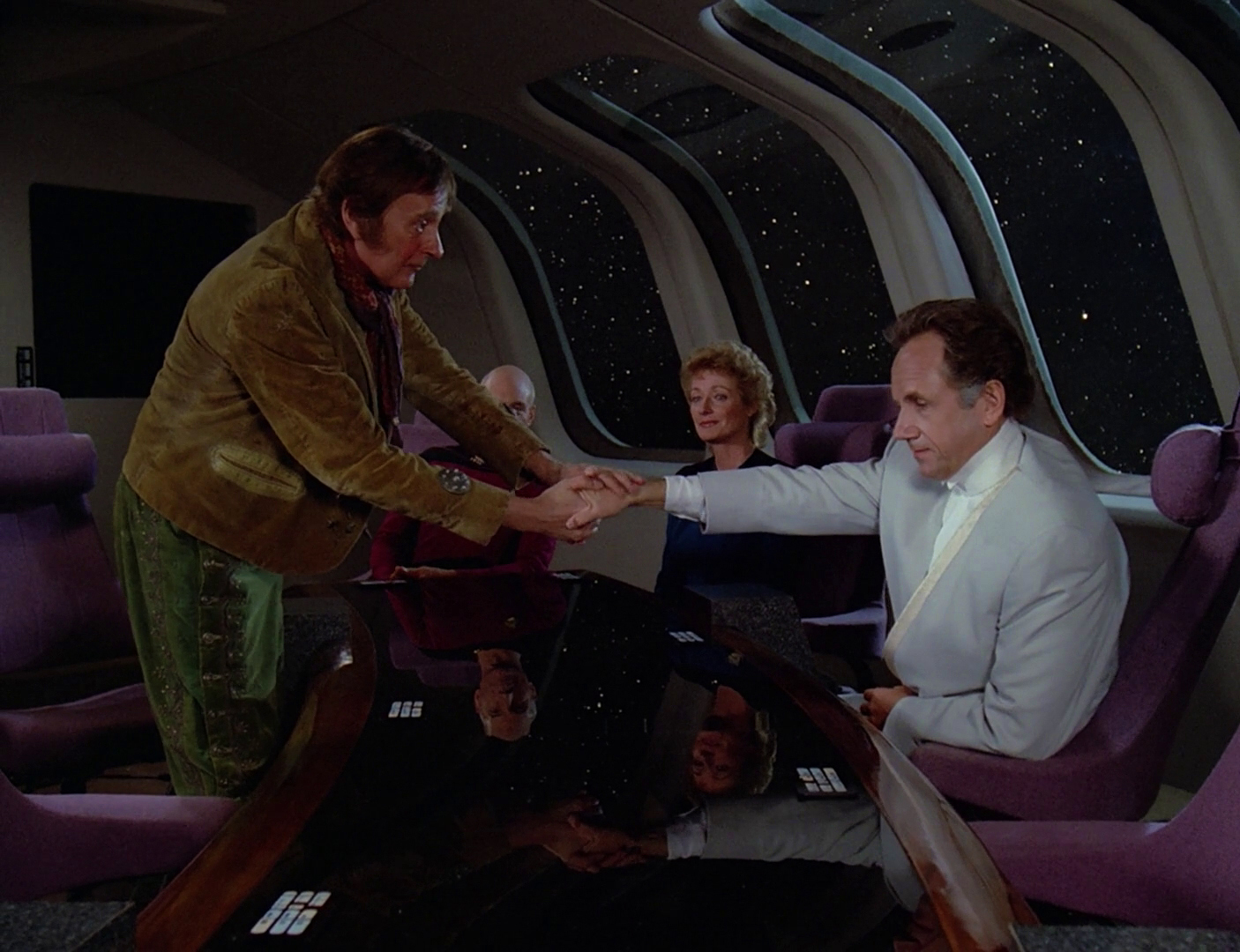
Score: 3/10 – What starts as an interesting concept gets mired down in a haphazard jumble of a story. While there are some humorous moments, the story is not very well constructed. For example, in the pre-credit scene, we see Worf acting in a distressed manner, and cut to the open title sequence with him having fainted and Doctor Pulaski being called to the bridge. We learn in the next act that Worf had a case of Klingon measles, which he is embarrassed by, and Pulaski covers for him. Worf performs a Klingon tea ritual (which includes Pulaski drinking a poisonous tea for some reason) as a way of thanking her. This subplot is done before the second act starts and is largely forgotten, which leads me to wonder why it was included in the first place as it has zero impact on anything else in the episode. Yes, it builds a bit of a bond between Pulaski and Worf, but that is it. It served no real purpose other than to fill time, which makes me suspect that this is what was the original purpose of it. Then we look at the Irish-stereotype Bringloidi, whose ancestors turned away from technology and went for a simpler way of life. This is where we see the humorous parts as Picard and his crew try to deal with a particularly challenging groups of humans. Picard has a great moment where he bursts into laughter at the situation of his cargo bay being used to transport farm animals and tells Riker that sometimes one has to “bow to the absurd”. While the Bringloidi do provide some comic relief, they are little more than a classic examination on utilizing cultural stereotypes for humor. This did not age well and seemed a bit outdated when the show first aired in the late 1980s. You have everything from the drunken inept patriarch to the fiercely sharp-tongued hot head of a daughter Brenna (who seems fine to be yelling at every man one moment and then swooning for a late-night tryst with Commander Riker). Even some of the jokes fall flat, such as when Worf is insulted by Brenna. Then we throw in the clone colony, which was the opposite of the Bringloidi, who turn to technology to solve every problem. There seemed to be an attempt to make a statement about having people have a right to chose how their body is used when Riker and Pulaski discover that they have had some of their tissue taken to make clones, but it is done in a way that is quick and not very impactful. Thankfully, the problems to both groups’ dilemmas is in each other, and everything is happily completed. For an episode with a handful of fun moments, the rest alters between dull and cringe-worthy. 


Relevance – 0 points. Other than Riker’s dalliance with Brenna being one of his memories in the infamous “Shades of Grey” episode, I couldn’t find any tie-in to anything else in Star Trek. Even the Worf-Pulaski B-storyline (which felt more like a C or D storyline) is not developed further. In other words, if you don’t catch this episode you are not missing any important details.


Continuity – 2 points. Character continuity is largely in tact here. Picard bowing to the absurd is oddly fitting for our distinguished captain. Of course, Riker is going to go for the girl. His and Pulaski’s objections towards being cloned make perfect sense, as does Worf’s embarrassment over having the measles and Pulaski being excited to participate in a Klingon tea ritual. One thing that did not make much sense was the fact that Worf came to Pulaski with the tea ceremony as a way of thanking her, knowing full well that the tea was toxic to humans. Sort of an odd way to show gratitude. Still, one can assume that he may not have intended to have her drink the tea in the first place, but since she gave herself an antidote ahead of time it worked. Universe continuity is good as well. Where I will deduct a point is story continuity. The whole Worf with the measles story was completely out of place in the context of this episode, and really was unnecessary.


Character Development – 1 point. Riker gets some make-out time with an attractive woman. Check. Worf is embarrassed for comic relief. Check. Pulaski makes a lot of grand speeches about ethics in science. Check. Picard has to make the best of an awkward situation. Check. Nothing really impactful in the development of any of these characters, so I can’t score more than a single point here.


Social Commentary – 1 point. Changing your perspectives to solve your problems. That seems to be the main take-home message of this episode. It was how the two groups of humans had to put aside their differences to save themselves. In reality, there was very little emphasis made on that. Oh, and cloning someone against their will is bad. Some wasted potential there. It was almost as if they were trying to make so many comments at once, that there was no real energy behind any of them. Making a comment on any aspect of life is commendable, but the way they were presented almost does as much of a disservice to them as anything else.


Cool Stuff – 0 points. Try as I might, I just cannot find anything that was cool about this episode. Some nice humorous moments, but nothing cool.


Rank – Ensign (7 points). I am sure that there are many who like this episode. I myself do find it a particularly bad episode, just an example of how the second season of TNG had some definite growing pains. If you are watching this on Netflix you can easily skip the show or let it play through. Enjoy the levity, even though there are some painful stereotypes thrown in. Don’t worry about what could have been and take it at face value.


If you would like to read other reviews from the Next Generation, click this link.


If you would like to read an episode review from any of the Trek series, click the following link to get to the series catalog. If the episode you want reviewed has not been done yet, then feel free to request it in the comments and I will see what I can do. 


Saturday, May 26, 2018

Episode Review - The Devil in the Dark (Original Series, Season 1)


For those who are new to my episode reviews, you can find the post where I establish my point criteria here


Overview – The Enterprise is called to Janus VI, a mining colony that is being terrorized by what they describe as a monster. Having claimed the lives of fifty miners, the creature seems intent on driving the humans off the planet. Kirk originally seeks to exterminate the creature when it takes an important circulating pump that is needed to keep the planet habitable for humans. When Kirk and Spock encounter the creature, they learn that there is much more to this silicon-based lifeform than meets the eye. Now, in a race to protect both the colony and the creature, Kirk and Spock try to discover what the creature wants and find a solution that will allow both parties to live in harmony.


Score: 9/10 – One of my favourite episode of the original series, “The Devil in the Dark” gives us a fantastic story that gives us a few surprises and deviations from the typical “monster-of-the-week” episode. We are given the Horta, one of the most interesting and unique creatures of the Star Trek world. Where life as we know it is carbon-based, the Horta is of the silicon variety. As a scientist, I was happy that they selected silicon as it has enough similarities to carbon to make it feasible and plausible to be the basis of life. I also love that the Horta is shown to be intelligent, ancient, and compassionate. It basically turns the standard “if it’s a monster, it must be evil” concept on its head, and gives a valid reason for the Horta to kill people. She is defending her eggs, her offspring, and the future of her species. The humans had inadvertently killed several of the eggs, and the Horta was doing everything she could to protect the rest. This is where Star Trek’s storytelling is at its finest, as it causes the audience to identify with and feel for a sentient life that is so different from us. In addition to suspense and action, there is some great humor to go along with the story, especially the closing scene. It is interesting to note that in hindsight, an episode that teaches us the importance of accepting diversity (in this case, diversity in sentient life forms), there are no women with speaking parts. Before anyone starts panning this episode for that, keep in mind that this episode is a product of its time.


Relevance – 3 points. This is the first time that McCoy uses the iconic “I’m a doctor, not a…” trope. In this particular instance, it is “…not a bricklayer”. This would become one of the good Doctor’s most popular catchphrases, with the other likely being “He’s dead, Jim”. That is definitely worth a mark in this section. I am also giving a point for Sulu mentioning the Horta in the third season episode “That Which Survives”. It is interesting to note that Sulu does not appear in this episode, although it is logical to assume that Sulu, a senior officer, would be aware of the Horta. This is also the first time that pergium, a valuable energy source, is mentioned. It will be referenced again in both Deep Space Nine and Voyager. While not nearly as famous as other substances that are mined in Star Trek (dilithium and latinum, for example), it is not one of those “created for an episode and then forgotten” things.


Continuity – 2 points. Story wise there was one thing element about this story that always bugged me. The various times that the Horta attacked and killed various miners and security officers, it always seemed to rise in front of the victim, who was usually armed, and in a few seconds attack them up close. When I first saw this as a kid, I wondered why nobody shot at it. Perhaps it is necessary to suspend some belief in this, but after re-watching it, I just couldn’t help but think that there is something not quite right here. I have to deduct the story continuity point for it. Otherwise, character and universe continuity work well here.


Character Development – 2 points. Kirk and Spock both seem to get the most attention in this episode. McCoy and Scotty are the only other main characters to be seen. In this episode, we see Kirk and Spock joust back and forth about the ethics of their situation. At one point, Kirk insists that the creature be killed on sight, with Spock speaking towards capture. Then, when Kirk encounters the Horta and feels inclined to spare the creature and learn more of it, Spock is the one who urges the captain to kill it. Some may think that this is an odd reaction for Spock, but as I thought about it I came to realize what was at stake. Spock has already shown how far he will let his loyalty to his captain take him with “The Menagerie”, and when it comes to the life of Kirk over the Horta, Spock makes the emotional yet logical choice to save his friend. The banter between Kirk and Spock is often entertaining, and here it delves into their friendship as they disagree on an important issue. While this is a good showcase of their relationship, it does little to move that relationship further along.


Social Commentary – 3 points. There is a lot of subtly in this episode. The episode title, “The Devil in the Dark”, originally looks as if it describes the Horta. In reality, it is what the Horta uses to describe the humans who have been destroying her eggs. Kirk and the others saw the Horta as a ruthless monster. They judged it as little more than an animal because it was so different from life that they knew. As they discover the truth behind the Horta, their attitudes change. They realize that they are more alike than different. This is a recurring theme in Star Trek, as Gene Roddenberry intentionally wove this idea into the stories he created for Star Trek. The inclusion of former war adversaries (Japanese and Russian) as members of the crew is an example of this. One of the strengths of this episode is making the monster relatable. We empathised with the creature who was merely protecting her children. While we may see those who are different than us with suspicion, once you get to know them it is easy to see what you share as opposed to what divides you. In today’s world, that is something we need more than ever.


Cool Stuff – 2 points. There is no doubt that the Horta is a really cool part of this episode. Yes, it’s a guy under a shaggy colorful rock-like thing, but considering that it was done 50 years ago, it still looks unique and interesting. Having it based on a silicon basis of life was also very interesting and different. I loved everything about it. I also want to score a point for the twist on the typical monster of the week approach. Instead of being a creature to be defeated, we actually come to side with the Horta, learning that it is an ancient, disciplined, and intelligent species. I consider the truth of the Horta to be one of Star Trek’s best plot twists, and that is enough for another cool point.


Rank – Admiral (21 points). A classic episode that is a perfect example of what made the Original Series a classic. Learning to co-exist with those that are different and seeing a creature as more than a monster to be overcome is a great lesson. It is often on people’s Top 10 favorite episode lists for a good reason.


If you would like to read other reviews from the Original Series, click on the link here.

If you would like to read an episode review from any of the Trek series, click the following link to get to the series catalog. If the episode you want reviewed has not been done yet, then feel free to request it in the comments and I will see what I can do.


Wednesday, May 16, 2018

Episode Review - United (Enterprise, Season 4)

For those who are new to my episode reviews, you can find the post where I establish my point criteria here


Overview – The Romulan drone uses its emitters to appear like Enterprise as it attacks and destroys a Rigellian vessel. On board the vessel, Trip and Reed do their best to stay alive and sabotage the ship. Meanwhile, aboard the real Enterprise, Archer must deal with the aftermath of the recent battle between the Andorians and the Tellarites, which has left Talas mortally wounded. Shran seeks revenge against the Tellarite ambassador, forcing Archer into a tough situation between allowing his ally to seek revenge or save the peace talks by fighting Shran in a duel to the death. Archer tries to find a way to unite the feuding peoples, save his crewmen on the drone ship, and thwart the Romulans in their attempt at disrupting the peace in the region.


Score: 9/10 – The second part of this exciting story arc continues the action and fun from the first part. Now that we know the Romulans are piloting the drone ship from Romulus, we are given some great insight into the Romulan home world. Malcolm and Tucker are given a real test of wits as they try to sabotage the drone ship while avoiding the Romulan attempts to kill them. We also see the aftermath of the Andorian attack on the Tellarites on Enterprise, which leads to the death of Talas and a duel to the death between Shran and Archer (who offers to substitute for the Tellarite ambassador in an effort to salvage the peace mission). It is a tense moment where the survival of our favorite blue-skinned character is questioned. A unique interpretation of the Code of the Ushan allows the captain to win the contest without killing his opponent (and in doing so, teaches us a little something about Andorian antennae physiology). The coming together of Vulcan, Andorian, and Tellarite vessels to assist Enterprise in stopping the Romulan drone ship is reminiscent of the TNG episode “Redemption, Part 2”, where another fleet is assembled to stop a Romulan plot to disrupt a region of space. It is also a fun foreshadowing of the United Federation of Planets that we will come to know and love. “United” serves as a great continuation of this important story and ends with yet another surprise that gets you ready for the next episode.


Relevance - 2 points. The death of Talas, the second most significant Andorian character, is important here, and will establish the motivation for the duel between Shran and Archer. I am also scoring a point here for the brief yet significant introduction of the Aenar, an albino sub-species of the Andorians. This species will take a more prominent place in the next episode, but it gives us a lot to anticipate.


Continuity - 3 points. There is nothing that contradicts any continuity in this episode. Story wise things proceed smoothly, as does the universe. The Romulans get a bit more screen time, and they seem to be up to their old tricks. Characters are acting as to be expected. Shran, while fiercely loyal to his people, seems to have really grown fond of Archer. Their mutual respect is growing into a solid friendship.


Character Development – 3 points. Archer truly gets some great moments here, which truly shows why he is going to become the President of the UFP in the future. He puts his own life on the line to salvage the alliance and learns enough about Andorian customs that he is able to find a way to honor their customs and not kill Shran. We also see more development between Reed and Tucker as they try to find a way off the Romulan drone ship. The Romulans have Tucker in a certain death situation, and Reed agrees to their demands to save his superior officer and friend.


Social Commentary –  2 points. Putting aside differences to work for a greater good is a common theme and speaks to the notion that we are stronger together in spite of our differences (and quite possibly because of them). There is also the idea that sometimes, for the greater good, we must stand against a friend or ally. The only way that Archer could salvage the alliance between adversaries was to put his own life on the line and fight his friend. It also helps to understand other cultures and traditions, as Archer was able to win the contest without killing Shran. He honored the Andorian way and was able to build a foundation that would eventually lead to the start of the United Federation of planets.


Cool Stuff – 2 points. The Ushan duel between Shran and Archer is definitely noteworthy here. The weapons and tradition are cool, and the fight is intense. The ending, where Archer delivers the final blow, leaves us wondering if Shran indeed dies. When it is revealed that Archer only incapacitated Shran, we breathe a selective sigh of relief. The ending also gives a cool surprise as we get our first glimpse of an Aenar, the blind, white Andorian species that appears to be working with the Romulans.


Rank – Admiral (21 points). Action, humor, suspense. This was a fun episode with a lot riding on it. When I watch this episode, I can’t help but feel for what might have been had Enterprise been given at least one more season, but at least we had an excellent story that gave us more Shran and the Andorians.


If you would like to check out my other episode reviews for Enterprise, simply click here.


If you would like to read an episode review from any of the Trek series, click the following link to get to the series catalog. If the episode you want reviewed has not been done yet, then feel free to request it in the comments and I will see what I can do.


Friday, May 4, 2018

Episode Review - Babel One (Enterprise, Season 4)

For those who are new to my episode reviews, you can find the post where I establish my point criteria here


Overview – While transporting a Tellarite delegation to peace talks at Babel One, the Enterprise encounters the wreckage of the Kumari, and rescue Shran and some of his crew. The Andorians claim that it was a Tellarite vessel that attacked them. Tensions rise even further when an Andorian ship attacks Enterprise. As Archer and his crew try to determine what happened, suspicions between the Andorians and Tellarites continue to escalate. The crew discover a strange, alien ship that appears to have the ability to project the appearance of different types of vessels. They learn that the ship is Romulan, and Tucker and Reed beam aboard to investigate. As distrust between the Andorians and Tellarites mounts, matters become violent and Telas, Shran’s lieutenant and mate, is severely injured. By the end of the episode, Tucker and Reed make a startling discovery about the Romulan ship.


Score: 9/10 – “Babel One” is a perfect reason as to why Enterprise was cancelled far too soon. Like many good shows of the day, it often takes a few seasons to really build some steam, and the fourth season of Enterprise was excellent. In this episode, we get what many fans had been asking for, which is a glimpse into the beginnings of the Federation. We also get action, humor, suspense, intrigue, and some twists and turns we were not fully expecting. Shran has always been a popular character, and here Jeffery Combs is given some great scenes. We also get some greater insight into both Andorian and Tellarite culture. Another strength in this episode is how it shows how much Archer has come as a diplomat, reminiscent of the cowboy diplomacy that was often associated with Captain Kirk. T’Pol’s marriage being dissolved is almost treated as an afterthought, and while it is handled in typical T’Pol/Vulcan fashion, I thought it could have been fleshed out a little more. Overall, an excellent episode.


Relevance – 3 points. Of course a point will be scored for Babel, the famed peace location that served as the backdrop to the Original Series classic “Journey to Babel”, which served as our introduction to Spock’s parents. This is one of the things that I enjoyed about Enterprise, in that we were able to weave in much of the Original Series lore. Another point will be scored for the fate of the Kumari, Shran’s ship that he had commanded for several previous episodes. A final point is scored for the advancement in the relationship between Shran and Talas. This relationship will be important for the development of the next episode. If that is not enough, we are given a little tidbit of information from T’Pol, stating that her marriage has officially ended.


Continuity – 3 points. Character continuity is of particular interest here. One scene in particular that shows this is when T’Pol informs her captain that her marriage has ended. Archer expresses sympathy, while T’Pol brushes it aside in her typical fashion. It highlights how far these two have come. Universe continuity is also intact. The Romulans have always been trying to disrupt things from the shadows, and the remote-piloted ship is a perfect example of this. Story wise, everything works here as well.


Character Development – 2 points. While T’Pol’s marriage is dissolved in this episode, there is little else said about it. We also have Tucker and Reed with some action on the Romulan vessel, but aside from how they work together, nothing deeper is provided. No, this episode is mainly about Archer and his growth as a diplomat. We see him wrestle with doubts about their mission, while T’Pol patiently points out that he, Earth, and Vulcan have come a long way in such a short period of time. It highlights the fact that Archer has done a lot to foster relations between species that often were adversarial towards each other. Of course, this is building towards the events of the next episode, but it solidly establishes how much Archer’s leadership skills have grown.


Social Commentary – 1 point. As is typical of some of these action episodes, the excitement comes at the expense of a solid commentary on our present-day world. This is partly due to the fact that “Babel One” is setting up for the events of “United”, which actually carries a stronger message. This is also due to the notion that a lot is happening, and sometimes we just have to tell the story and not worry about saying something profound. We can glean a little something from the importance of working together. Reed and Tucker have to rely on each other as they explore the Romulan vessel, Archer has to teach the Tellarites and Andorians that they have to work together to defeat a common foe, etc. Star Trek is at its best when it makes us think more, but that does not mean that it’s not excellent when it doesn’t.


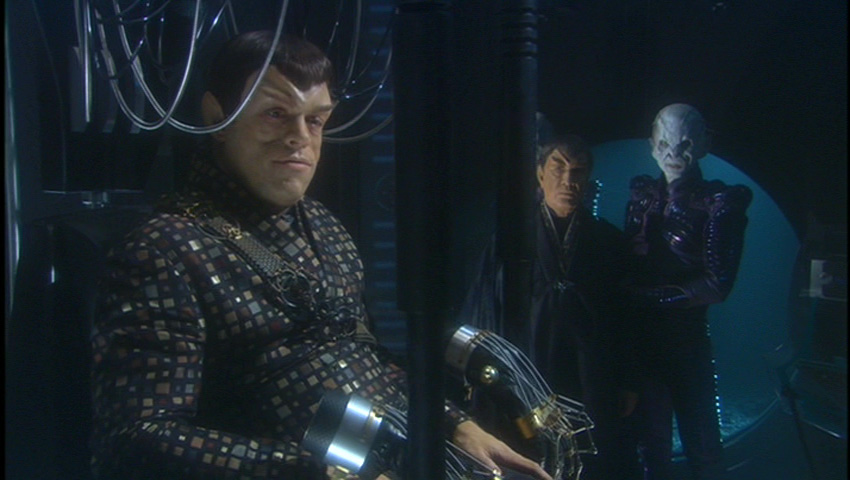
Cool Stuff – 3 points. One point scored for showing us a cool view of Romulus, which until this point has only been seen via matte paintings. I also scored a point here for the ship, both in design and for it’s part in the story-telling. I loved how it allowed us to see a few different models of ships. And the premise of it being remotely piloted from far away was interesting. I also liked how it was used to sow seeds of distrust among the future founders of the United Federation of Planets. A cool story-twist. Finally, the Tellarites are shown in a way that we have rarely seen, given far more attention than in the past. While the Tellarites are not as iconic as the Vulcans, Klingons, or even the Andorians, they had always been present in the background of Star Trek, and here they are given the spotlight like never before.


Rank – Admiral (21 points). I’ve said it before and I’ll say it again, Enterprise deserved more than it got, and “Babel One” is a perfect example of it. I love how we see how the Tellarites and Andorians are brought together, and we are given a fun ride as the story plays out.


If you would like to check out my other episode reviews for Enterprise, simply click here.


If you would like to read an episode review from any of the Trek series, click the following link to get to the series catalog. If the episode you want reviewed has not been done yet, then feel free to request it in the comments and I will see what I can do.