Showing posts with label Leonard Nimoy. Show all posts

Friday, March 3, 2017

Episode Review - Amok Time (Original Series, Season 2)

For those who are new to my episode reviews, you can find the post where I establish my point criteria here


Overview – Spock is acting erratically, showing emotional outbursts. He requests that the Enterprise return him to his home planet of Vulcan, where he is to be married. Kirk and McCoy soon learn that Spock is entering the pon farr, a time when Vulcans must mate or they could die. Upon arrival at Vulcan, Spock’s betrothed has a surprise for Spock which finds him pitted against his friend and captain in a duel to the death.

Kirk discusses his science officer with the legendary T'Pau

Score: 10/10 – One of the most popular Star Trek episodes of all time, this is an episode that is exciting and sheds some light on the Vulcan people that has so far been lacking in the series. We get to see the planet Vulcan for the first time, which is always nice. Most importantly, we get a great story that really shows the dynamics between the famous Kirk-Spock-McCoy friendship.

McCoy checks out Nurse Chapel's homemade soup.

Relevance - 3 points. One point scored for pon farr, which will be touched on again in the movie Star Trek III as well as on Voyager. A point is scored for the appearance of T’Pau, a legendary figure in Vulcan history who, while making her first appearance in Star Trek, is seen as her younger self in the three-part Enterprise arc starting with the episode “The Forge”. A third point is scored for the first appearance of Pavel Chekov, who would come to be a huge fan favorite in the series. We also see the Vulcan hand salute and the accompanying “Live long and prosper” for the first time, so to say that this episode is highly relevant to Trek lore would be an understatement.

Live long and prosper.

Continuity - 3 points. This story establishes so much about Vulcans and their culture that it is considered by many to be its genesis, so Trek universe continuity is secure. Storyline works, nothing contradictory here. Finally, character continuity works, even with Spock’s emotional rollercoaster ride.

T'Pring has a different idea in mind

Character Development – 3 points. A strong Spock story that also shows McCoy’s quick thinking and Kirk’s loyalty to his Vulcan friend. We would see this devotion of Kirk towards Spock again in the Search for Spock movie. Still, this gives us the most insight into not only Spock but Vulcans in general.

Spock cannot return Christine's feelings.

Social Commentary – 0 points. This is an excellent story with lots going on, but I struggled to find anything that was socially relevant to us. Still, a great story, but that’s not enough to score in this category.

The fight to the death

Cool Stuff – 3 points. Spock, and thereby Vulcans, was one of the most popular aspects of Star Trek. As a result, fans had been eagerly awaiting a trip to Vulcan to see where our favourite alien grew up. We get to see that in this episode. We also get to experience the iconic Star Trek fight music for the first time (if you are not humming it right now, then turn in your Trekkie card). Finally, at the end of the episode where Spock discovers that Kirk is still alive, he drops his Vulcan composure and gives us a huge Vulcan smile. While he quickly regains his composure, it is still a warm and cool moment.

You're dead, Jim.


Rank – Admiral (22 points). Honestly, if you are a fan of Star Trek of any type and have not seen this episode, WHAT IS WRONG WITH YOU?! This is about as classic as any episode gets, and is likely on so many people’s Top Ten lists of best episodes from the Original Series that I think the few who don’t place it there say that they do so they don’t look out of touch. And if you still think that Amok Time is not one of the best episodes of Star Trek, then come meet me out back and we can settle it plak tow style. Bring your Lirpa. 

Spock's momentary lapse in control

Thursday, December 8, 2016

Celebrating Star Trek VI: The Undiscovered Country


25 years ago Trekkies were celebrating the 25th anniversary of their beloved franchise. The Next Generation was riding high in ratings and reviews. A new series, Deep Space Nine, was just beginning to form in creative minds. Fans were most excited about the newest movie that was to be released on December 6, 1991. It was given the title “The Undiscovered Country” and it was being billed as the final voyage of the original crew. Leonard Nimoy, most famous for his role as everyone’s beloved Vulcan, Spock, was one of the major creative forces behind this film. Not only was he taking on his regular acting role, but he served as one of the story writers. Directing this movie was the talented and beloved Nicholas Meyer, who was widely revered for directing “The Wrath of Khan” and credited with setting the bar for all Trek films. The celebration was a bit subdued, as a few weeks before its release, Star Trek creator Gene Roddenberry had passed away. The movie was dedicated to Gene, who was able to watch it two days before he passed.


Star Trek VI was the only Trek film (to date) that I had the privilege to see in a special advance premier screening. I was a high school student living just outside of a small rural Alberta town, and the movie was being shown in Edmonton, one hour drive away. As both of my parents were unable to go, we called upon a family friend to take me. There was a bitter blizzard that evening, and after a few vehicular mishaps, the two of us finally managed to get ourselves seated in the theater just as the trailers ended. There is nothing like watching a Trek film with the room packed full of Trekkies. When the opening image appeared, Gene’s dedication, we all cheered. Then the music started, and we prepared ourselves for an amazing ride of thrills and nostalgia. The opening credits elicited many more cheers as the names of William Shatner, Leonard Nimoy, Nicholas Meyer, and others appeared. Then, as the introductory music faded, Praxis exploded, and we were off.


The Undiscovered Country may not be my favorite Trek movie (Wrath of Khan forever!), but it in no way disappointed us. After the poorly received fifth movie, many wondered if that was it for the franchise in film. Thankfully, the powers at Paramount Pictures wanted something special for the 25th anniversary and a more fitting send off than Star Trek V, and #6 delivered. Big time. It has everything that is needed to be a great Trek film. A compelling story that spoke directly to current events of our time (in the story, while the Federation and Klingon empire were seeking peace, America and its allies were coming closer to ending the cold war against the USSR). There was action and humor, suspense and fondness. The pacing of the plot was near perfect, and when the end approached, we had arguably the best moment of closure with the signatures of the actors we had loved for so long appear on the screen as a thank you to us fans. We left the theatre knowing that we had just completed a fitting sendoff to our dear crew of the USS Enterprise.


There are many aspects of this movie that I love. Indulge me in mentioning a few. First, there were some great guest characters. We saw a few old favourites. Admiral Cartwright was back, played once again by the impressive Brock Peters (we had last seen him in Star Trek IV: The Voyage Home). John Schuck also reprised his Voyage Home character as the Klingon ambassador to the Federation. Of course, we had Mark Leonard reprise Sarek for the final time (he had just appeared on TNG in Part One of Unification). Some new characters played by seasoned actors were introduced. Kim Cattrall, soon to be of Sex and the City fame, pulled off a fairly good Vulcan in Valeris. David Warner gave depth to the Klingon Chancellor, Gorkon. Kurtwood Smith played the Federation President, his first of three Trek roles. Super model Iman played the shape-shifting Matria. Rene Auberjonois, who we would grow to love as Constable Odo on DS9, was the treacherous Colonel West. We even had Michael Dorn play the grandfather of his TNG character, also named Worf. That’s a lot of star power.


Best of all, however, was General Chang, deliciously played by Christopher Plummer. I would likely rank Chang easily in my Top 3 Trek movie villains. He was cunning, intelligent, witty, and could quote Shakespeare in both English and its original Klingon. Plummer stole virtually every scene that he was in, and Chang sparred with Kirk like few could. I loved watching the final battle scene for nothing more than the gusto that Plummer brought to it. I have never been able to hear the line “Cry havoc! And let slip the dogs of war!” since without hearing Chang’s delightful voice. If nothing else, you have to admit that only a Klingon warrior would bolt an eye patch to his head. Sorry Martok, but Chang proved he was far tougher.


The story was so poignant and relevant to the world that was in 1991, and in many cases is even more so now. For the first time, our cherished heroes had to confront their prejudices. Klingons had been the enemy for so long it was easy to hate them. As much as Gene wanted the future to be all rainbows and utopia, even the most morally aligned characters have their flaws. The verbal debate between Spock and Kirk at the beginning of the mission highlights this. When Spock tells Kirk that the Klingons are dying, Kirk emphatically responds “Let them die.” In the movies, Kirk developed every reason to hate the Klingons, and he held onto that hate for many years. Likewise, Spock also had his prejudices towards the superiority of Vulcan morals. He had difficulties believing that his own protégé was a traitor due to her heritage. It took both of these iconic characters a great deal of courage and inner strength to admit and overcome this. Twenty-five years ago, as I mentioned, both sides of the Cold War were learning to overcome decades of distrust against each other. Today, we see the divisions more clearly and deeply as our world is divided on everything from religion to politics to race and to ideologies. Each of us needs to make a careful examination of our own prejudices and see what we need to do to keep them in check.


Most of all, the greatest strength of the film was the core group of characters that we had faithfully watched and re-watched for a quarter of a century. Everyone had some great moments. Kirk, Spock, and McCoy all had a great deal of limelight, but we saw great contributions from all the others. Scotty made some key discoveries in the investigation of the conspiracy, Uhura puts her linguistic skills to good use in crossing the Klingon border, and Chekov gets some of the greatest one-liners in the franchise’s history (“Guess who’s coming to dinner”). Most notably was Sulu, now Captain Hikaru Sulu of the USS Excelsior (a Search for Spock throwback). This was the decision that, for me, signaled that this was indeed the end for the original crew. They were finally starting to go their separate ways. This was, indeed, good bye.


Finally, I think that Undiscovered Country was a great movie for bringing closure to this wonderful televisions series that stretched into the feature films. Because it was cancelled after the third season, there wasn’t a final hurrah for the Enterprise and her crew. All of the other television series had it, but not the original. Since this was indeed the final voyage, we fans were able to send off Kirk, Spock, McCoy, Scotty, Chekov, Uhura, and Sulu in grand fashion. I felt that this was by far a better send off than Picard and company received in Nemesis as it left us with a satisfying sense of completion, which is something that every good franchise will eventually need. While the franchise would continue in some shape or form for another twenty-five years (and counting), this was a necessary final chapter for a cast of characters that are permanently etched into the annals of science fiction and pop culture. The Undiscovered Country proved to be more than worthy of a final ride into the sunset, and it ended with the most fitting of final lines, which also seems to set the tone for ending this celebration.

Second star to the right. And straight on ‘til morning.


Thursday, November 17, 2016

Why I Love the Animated Series


Celebrating the five full decades of Star Trek should be a yearlong event, so I thought I would spread the love of all things Trek. Previously in this series I touched on why I loved the Original Series, the Next Generation, Deep Space Nine, Voyager, and Enterprise. I last wrote on why I loved the Kelvin timeline (my skin has recovered somewhat from the burns that I endured at those who vehemently disagreed with me). Next up, we look at what some consider to be the conclusion of the five year mission of James T Kirk on the USS Enterprise, Star Trek: the Animated Series.


On September 8, 1973 (exactly seven years after Star Trek premiered), the Animated Series warped onto television screens. At the time, animation was still largely seen as a format exclusive to children’s entertainment, so the vibe was a bit different. Death was not as common on these new adventures, episodes were a half hour long, and the theme song was different. The familiar includes most of the main cast. William Shatner, Leonard Nimoy, Deforest Kelley, James Doohan, George Takei, Nichelle Nichols, and Majel Barrett all reprised their roles, with several supporting characters being voiced by Doohan and Barrett. Only Walter Koenig was not brought back, due to budgetary restraints, although he made his own contribution by writing the episode “The Infinite Vulcan”. 22 episodes were made, and the show won a Daytime Emmy for outstanding Children’s Series in 1975. Many fans felt that they were allowed one last set of adventures with their beloved crew. While this series is not necessarily considered to be canon, there were many elements of it that became incorporated into the other series and films. I will confess that this series is the one that I am the least familiar with, but that has more to do with the fact that I was only able to watch the series in the recent years once they were available on DVD. That does not mean that I am not fond of the series. Here are the top 5 reasons why I love the animated series.


1. The fans were validated – in the reference book “Star Trek – Where No One Has Gone Before”, it was reported that in the early 70s NBC had reworked their Nelson ratings system. They reran the numbers and found that Star Trek, the show they had cancelled in 1969 due to low ratings, had actually been reaching their target audience and had really good numbers. For years NBC was baffled at the amount of fan mail that they had been receiving for Star Trek and were puzzled by the success of the show in syndication. The new ratings system solved that mystery; the show that they thought was a dead duck had actually been the golden goose, and they killed it. The Animated Series was, in part, NBC’s way of saying they had made a mistake and they were sorry. It turned out all along that the fans were right, and the Animated Series was their validation.


2. Sequels to Popular Stories – Ever wondered what happened to Cyrano Jones and the Tribbles? Did you want to return to the shore leave planet? How about wanting another encounter with Harry Mudd? Those were all answered in three separate episodes: “More Tribbles, More Troubles”, “Once Upon a Planet”, and “Mudd’s Passion”. Each fit within the new format wonderfully. We also saw return appearances of other favourite characters such as Sarek (voiced by Mark Leonard), Amanda Grayson, Kor, Koloth, Korax, and Commodore Wesley, and Lieutenant Kyle. The Guardian of Forever was also revisited. It was nice to see the familiar faces that had become so popular with the fans, although they were not all exactly as how they were last seen. The tribbles received an unintentional upgrade. Due to the colorblindness of director Hal Sutherland, who did not realize that the tribbles were not the intended grey, the tribbles appeared pink.


3. Yesteryear – In all of these essays I have written I haven’t used a specific episode as a reason. Well, that will change now. I think “Yesteryear” is one of the strongest episodes of all the series. I would rank it with great classics like “City on the Edge of Forever”, “The Inner Light”, and “The Visitor”. It involves time travel with the Guardian of Forever and has Spock going back in time to help his younger self. It was a great story that really develops the character of Spock, and we get to see Vulcan in a way that we haven’t yet.


4. Increasing the realm of the possible – animated series have a distinct advantage over a live action series, or at least back then they did. Things that directors and producers could only dream of doing but were unable due to budget and technology were now possible with animation. New technology and more alien-looking planetary designs were now achievable. We saw the first holodeck, which would later be adopted by TNG. Most notable in this department was a difference in the aliens. In the Original Series, the ship was almost exclusively manned by humans (Spock being the major exception). Now, we were able to have the Edosian navigator Lt. Arex, and the feline-esque Caitian operations officer M’Ress. Animation allowed more diversity in aliens on the ship in a way that had previously been impossible, and is still limited today in a live action show’s budget.


5. Nimoy’s stand – When the show was first pitched, the idea was to not bring back Nichols and Takei to reprise their roles. This was done to save money by having Doohan do all the male voices and Barrett to do all the female voices. When Leonard Nimoy heard of this, he made a stand that almost stopped the show from happening. Nimoy argued that what made Star Trek special was that it showed great diversity in the crew, most notably the presence of Uhura and Sulu. Nimoy said that Nichelle and George were essential to maintaining that spirit, and if they were not going to be a part of the show, then neither was he. Since nobody could imagine Star Trek without Spock, nor Spock without Nimoy, the producers gave in and Uhura and Sulu were voiced by the original actors. Say what you will, but Leonard Nimoy had power and knew how and when to use it. For that alone, I love what the Animated Series represented.


And there you go. There is one last entry in this series, and that is why I love the Motion Pictures (Prime Timeline, of course). Enjoy!


Saturday, July 23, 2016

Review – Star Trek Beyond


Last night my wife and I went to see “Star Trek: Beyond” on opening night. We enjoyed the movie, even beyond our high expectations. While I will save a more in depth review for later (I don’t want to spoil it for those who have not yet had a chance to see it), I thought I would give you my initial thoughts on how the latest of the Kelvin Timeline movies.

It is three years into their five-year mission, and Kirk and the crew of the Enterprise arrive at the wonderful space station Yorktown. Both Kirk and Spock begin to contemplate a future away from the ship, when a mysterious alien arrives asking for help. The Enterprise is sent on a rescue mission and quickly find themselves being the ones in need of a rescue. Before too long the ship is attacked and the crew scattered across a strange planet. Their enemy is Krall, a mysterious and violent man who is determined to push back against the Federation. With the help of a new ally, Kirk, Spock, McCoy, Scotty, Sulu, Chekov, and Uhura are pushed to their limits in saving not only themselves but the future of the Federation.

The movie is a roller coaster ride of action. It keeps you engaged and eager for more throughout the whole movie. The pacing of the movie is not perfect but is better than most movies. The dialogue is clever and fits the characters well. Everybody gets a good dose of screen time. Naturally the focus is on Kirk and Spock, but Scotty and Chekov get a bit more attention than they usually have in the reboot franchise. While it is true that the storyline is a bit formulaic and can be a bit predictable, it is still a story that shows elements of thought and planning with a few surprises here and there. Yes, there are moments when, contrary to Scotty’s classic plea, the Laws of Physics are changed. Guess what people? It’s a movie. It helps to allow yourself to ignore these things from time to time. Oh, and if there is nothing else that critics of the first two movies have to rejoice over, the lens flare effects are gone. And there was much rejoicing.

Most importantly, the movie introduces us to a wonderful villain. While not on the level of Khan (I should add, Wrath of Khan, not Into Darkness Khan), he is right up there as the best villain of the Kelvin Timeline series. Krall is intensely portrayed by one of today’s most talked about actors Idris Elba. Krall is evil, but as we learn was not always this way. To develop his character more would have required either more time or a second movie, but he did well for the time that he had. Most importantly, as in all things Trek, Krall provides the movie with some much needed social commentary. Krall is convinced that the Federation concepts of unity among different cultures is weakness, while our heroes beg to differ. In a time where the United States is choosing their next president and one of the main candidates claims that the cooperation between the US and its allies has contributed to a weakening of US influence, I found this attitude of Krall’s to be quite timely. My one critique of this theme is that it does not become fully resolved. I hope this does not give too much away, but the unity of the different cultures in the Federation does not defeat Krull or prove his ideology wrong. Instead, the resolution of this ideological conflict is forgotten.

This movie also has a healthy and appropriate dose of tribute to the past. While the previous film was heavily criticized for trying too hard to retell familiar stories, this one finds the right balance that would help the movie appeal to both the diehard and the newer fans. Events such as the Xindi War (from Star Trek: Enterprise) and the Romulan War are referenced as having an impact of the events of this story. Also, the movie pays a loving tribute to the previous Star Trek crew and the actors who first brought these iconic characters to life. Near the end of the movie there is a special scene that brought tears to my eyes as Shatner, Nimoy, Kelley, Doohan, Takei, Koenig, and Nichols are given a special tip of the hat. For me, it was especially touching as we no longer have some of these wonderful people with us. Most recently, we lost Leonard Nimoy. His absence is specifically touched on as the movie is dedicated to his memory. When the characters discuss Ambassador Spock (and, by proxy, Leonard Nimoy), the actors are no longer acting. Their reactions are genuine, heartfelt, and true.
Sadly, another dedication for this movie brought about a certain sense of loss and sorrow. In June we lost Anton Yelchin, the actor who brought such energy and enthusiasm to the character of Pavel Chekov. He was killed in a freak and tragic accident. In recent interviews producer J. J. Abrams has stated that he would go ahead with the fourth movie but without the recasting of the character of Pavel Chekov. What will this mean for the character has yet to be decided, but there was a sense of finality when the last dedication “For Anton” came across the screen. Rest in peace, Anton. Say hi to the rest of the gang for us.


Star Trek: Beyond is a fitting film to help us celebrate 50 years of Star Trek. It has amazing visuals, exciting action, and great relationships. Whereas the other movies featuring the original cast had the benefit of pre-established characters to allow more in-depth story development, “Beyond” does well in giving us a good story. Some meaningful characters are introduced, and some familiar characters are further developed. While not the strongest of Star Trek films, it is a worthy entry into the franchise. It goes beyond the expectations of this Trekkie.

Thursday, March 17, 2016

Episode Review - The Way to Eden (Original Series, Season 3)


Again, as requested, and on the heels of one of Star Trek's best original series episodes, I give you one of the worst (in my humble opinion, of course). Please know that such episodes in Star Trek are few and far between (off the top of my head there are only a precious handful of those that will earn this dubious ranking). Enjoy the read, and feel free to request any episode you would like! Oh, and the next episode review will feature a special guest writer/blogger/Trekker/old friend.


Episode Overview – The Enterprise rescues a group of intergalactic hippies, including the son of a prominent ambassador and an old girlfriend of Chekov's, who attempt to take control of the ship so that they may find the legendary planet of Eden. They succeed, and reach the mythical planet where they learn that their paradise is not what it appears to be.


Episode Score – 0/10. This is a painful episode for me to watch. Keeping in mind that the 1960s saw the height of the hippie movement in western culture, this attempt to recreate it seems forced and derivative. The music sung by the group is annoying, as are their colloquialisms and mannerisms (to this day, the name “Herbert” is uncomfortable for me to use). I also find it difficult to believe that a Federation starship could get so distracted by a concert of questionable music that it allows this band of misfits to take over the ship. There is also some poor editing (look for the scene on Eden where Kirk’s insignia appears on the wrong side of his shirt and some scenes of crew members collapsing that were taken from the episode “Spock’s Brain”). I tried to find something in this that I could use as a mercy or pity point, but sadly, I couldn't.


Relevance – 0 points. There was nothing that was relevant in this episode. No impact on future events or references to past events.


Continuity – 0 points. There was little, if anything, that contributed to the continuity of the Trek universe or story continuity. Some of the editing mistakes hurt the story continuity greatly. Universe continuity gets a hit as the Federation, an establishment of exploration and peaceful unity throughout the galaxy, is crammed into some sort of corrupt government agency by the space hippies that according to them it is a very different organization from what Star Trek has been promoting the last 3 seasons. And that is not mentioning the fact that they were able to turn a ship-wide concert broadcast into the most successful attempt to commandeer the Enterprise. I mean, genetically modified supermen under the leadership of Khan couldn't do it. Kang and his crew of Klingon warriors couldn't do it. How in the Milky Way did these space hippies do it? I'm not sure if that counts against the Universe continuity or the story continuity, so I will happily deduct both points for it. What greatly detracted from and even contradicts the continuity is in the characters. Walter Koenig has expressed that the episode was poorly written for Chekov’s character and that it was not how Chekov was originally seen.


Character Development – 1 point. I suppose that we can give this story a point for the development of Chekov as he has more to do, but it is a stretch. Walter Koenig himself has said that this episode was written in a way that was inconsistent with his character, so I can only give it the one point.


Social Commentary – 1 point. The hippie movement is no longer relevant to life today, although there will always be similar counter-culture movements (currently hipsters, I believe) that seek to rise against the establishment. The problem is that they are presented in a way that was foreign to the hippies of the 60s, and now are just plain goofy and annoying.


Cool Factor – 1 point. Honestly, I did not find much that was cool about this episode. I would say that Charles Napier, a veteran actor of many great TV series and films (including “Silence of the Lambs”, “Rambo”, “The Simpsons”, “Mission: Impossible”, and many others) would thankfully reappear in the Trek universe in an episode of DS9 called “Little Green Men”, more than 25 years later. That is a mercy for a talented actor to not be linked to only this episode, and could be seen as being cool (OK, here is the pity point I mentioned earlier).


Rank – Crewman (3 points) Not a good episode. I actually felt a bit embarrassed when I watched this with my wife for her first time. Feel free to watch it once to say you have seen Trek at its worst, but feel equally free to skip over it altogether.


Sunday, March 6, 2016

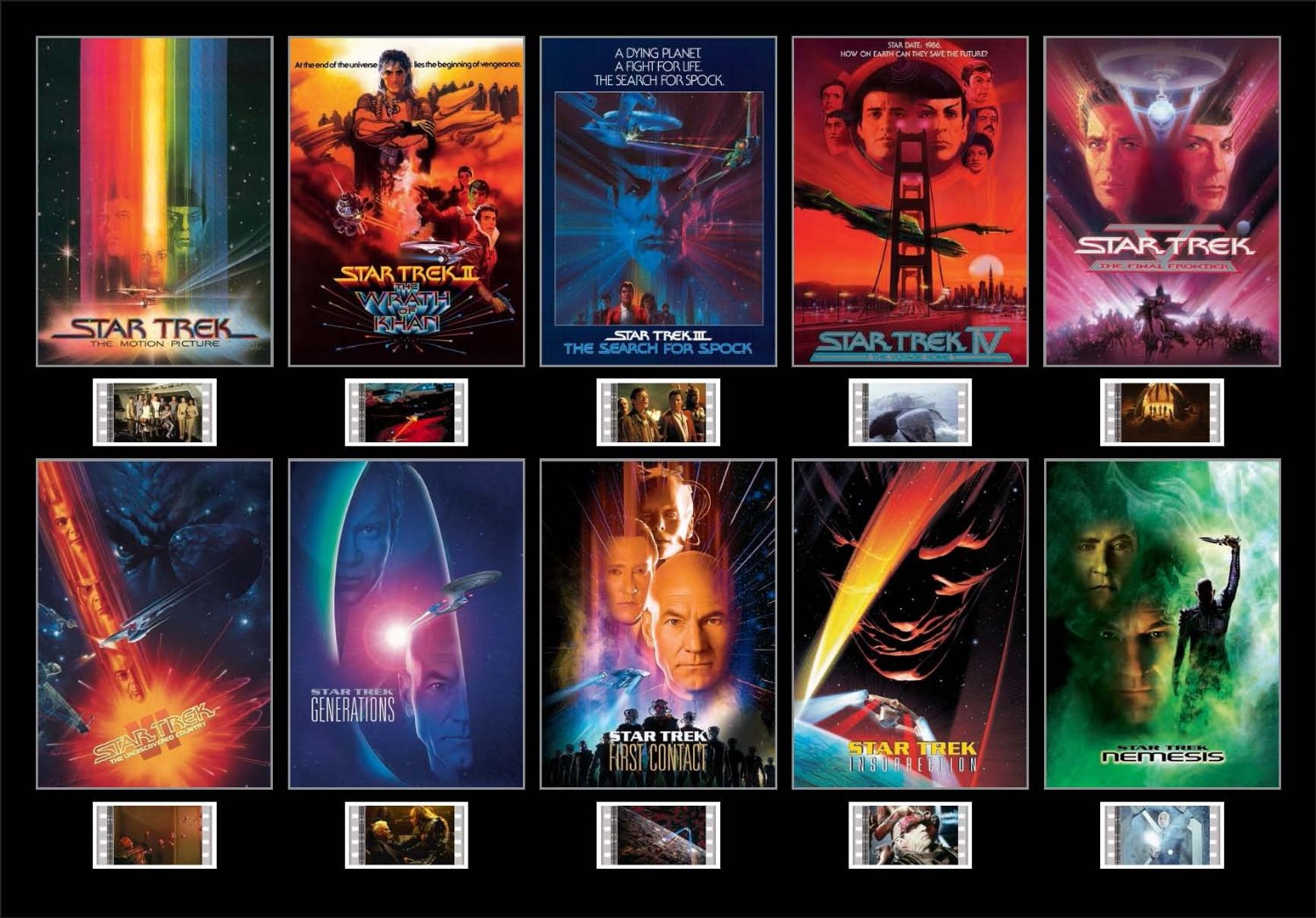
Top 10 List - Pre-Reboot Movies Part 2


Last post (not counting the news update), I ranked the bottom 5 of the ten pre-reboot Trek films. Today, we look at the top 5. I expect this list to be a tougher one to figure out, and I suspect that there will be a bit more disagreement, but that is the fun of things. 

Before we take a look at #5 I just wanted to provide a link to the website that helped me decide and sort out the different movies. Flickchart.com is a great website for people who love movies and have some spare time on their hands. Check it out at www.flickchart.com/

And now, #5


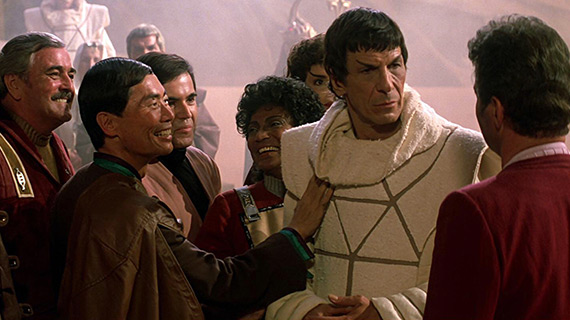
5. Star Trek III: The Search for Spock - There is an old saying that in the original 10 Trek movies, all the odd number movies were inferior to all the even number movies. There are two exceptions to that rule, in my opinion: the 10th and the 3rd. Star Trek III may not be as gripping as the Wrath of Khan or as fun as the Voyage Home, but it is a worthy movie with many strengths. This movie is the second in a compelling three-part adventure. With Leonard Nimoy at the helm as director (his first of two), Spock's presence was felt throughout. Kirk and McCoy both have some great moments, while the rest of the crew each gets their moment to shine. One of the greatest strengths of this movie is the supporting cast. While the debate will likely never be settled over who was the better Saavik, Robin Curtis plays a great Vulcan. Dame Judith Anderson came out of retirement from films for her role as the Vulcan Priestess. Mark Leonard returns as Spock's father, Sarek, bringing his typical poise and dignity. Especially fun are the Klingons, who since the films began were barely a footnote. There is a barely recognizable John Laroquette as Maltz, Steven Liska as Torg, and the ever wonderful Christopher Lloyd as the evil Klingon Commander Kruge. Lloyd plays his villain perfectly with a balance of cruelty and sophistication. Added to that is Merritt Butrick returning as Kirk's estranged son. The theme of sacrifice to save a fallen comrade is hit home in the exchange between Kirk and Sarek when discussing what saving Spock cost Kirk. Kirk says "If I hadn't tried, the cost would have been my soul". So while this movie may not be the greatest, it is still great. 


4. Star Trek VI: The Undiscovered Country - This movie was meant to be both a farewell and a celebration. Star Trek was 25 years old, and the original crew were about to take their final voyage. TNG was amidst the height of its popularity and the obvious heir to the franchise. DS9 was on the horizon, and it was time to give Kirk, Spock, and company their proper send-off. Sadly, the passing of Gene Roddenberry cast a somber shadow over the celebration. Star Trek VI is a near-perfect film for the franchise. Everything checks off. Great story with a timely social commentary, check. Fun script with proper balance of seriousness and humor, check. The original crew at their finest, check. My favourite features of this movie include the supporting cast. Mark Leonard returns as Sarek, David Warner as the Klingon Chancellor, and Michael Dorn as Worf's ancestor of the same name. Most impressive is Christopher Plummer as the Shakespeare-quoting General Chang, likely one of the greatest villains to ever tangle with Kirk. I also like having Nicholas Meyer back at the helm as director. I have always felt that Trek is best directed by those who get it, and Meyer definitely gets it. Leonard Nimoy was also greatly involved with the story and production. I also love how they moved the characters on, especially giving Sulu his own command. It is a fitting closing chapter of an important part of Trek history. While Gene had some issues with the story, he did get to see the movie before he died, and gave it his blessing.


3. Star Trek IV: The Voyage Home - One of the most successful (both financially and critically) movies of the franchise, Star Trek IV brings Trek to one of its highest points. The end to a great trilogy sees Kirk and company travel back in time to 1980s San Francisco. Leonard Nimoy returns to the director's chair. The story of environmental conscience can be overdone and become bogged down in preachy cliches, but this movie finds the right tone. I believe this movie also is the best at using humor. It is great seeing the elite of Starfleet out of their element in our day. Of particular note is finally getting Walter Koenig's Chekov to really exercise some great comedic talent, but Spock's befuddled nature, too much LDS, and the punk on the bus are all great entertainment. Everyone gets their moment. While having a great villain makes a movie great, this one doesn't need it, and this is one of the refreshing elements of this movie. While conflict is always a necessary plot device, in this movie the conflict comes with our past. The message to care for the Earth and the creatures that inhabit is timeless, for life on Earth will always be interconnected. I also enjoyed Catherine Hicks as the marine biologist that the crew must work with to save a pair of humpback whales. Most of all, after two movies with a darker theme to them, this is such a light-hearted escapade that everyone can enjoy it.


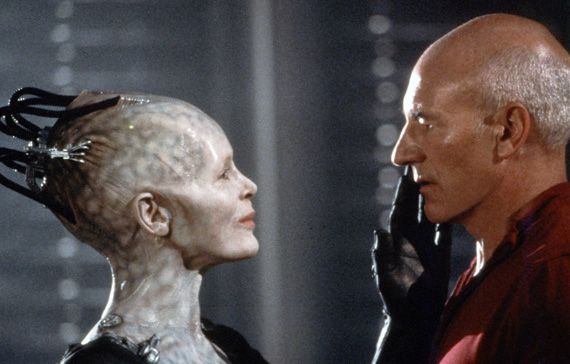
2. Star Trek: First Contact - While most of the TNG films ended up in the bottom 5, the number 2 spot belongs to their strongest contender. This movie is one great action adventure that delves deeper into Trek lore. While going back to our present day is fun and nostalgic, I like the idea of visiting a part that is still in our future that establishes an important moment in Trek history: first contact between Earth and extra-terrestrial life. While Generations seemed like a way for the Next Generation crew to take the torch from Kirk and company, First Contact was an opportunity to paint a new look for the Picard and his crew. We have a new Enterprise, bigger and better than ever. The crew gets new uniforms (which are later picked up by the DS9 group). We also see what is arguably the greatest enemy of TNG come alive on the big screen with a new look. Yes, the Borg have returned and they are going to pull all the stops to assimilate this pesky Federation. All the fish-out-of-water fun that made the Voyage Home so enduring is here as Riker, Troi, and Geordi try to help Zefram Cochrane (played by the always talented James Cromwell) launch the first warp-capable space vessel. Added to this is likely one of the most intense action stories as Picard, Data, and the rest of the crew fight against the zombie-like Borg from assimilating the Enterprise. they come face-to-face with the Borg Queen, portrayed with delicious coldness by Alice Krige. The Queen brings great depth to an already terrifying race. This movie also has many elements that I love in a great Trek story. There is humor (drunken Troi, as an example), suspense, and great drama. Patrick Steward takes Picard to new heights (or depths, possibly) as he gives an Ahab-like obsession to our normally composed captain. While many shows cause trauma to their characters, this shows that Picard is still healing from his experiences with the Borg, even though it was years ago. Data also gets growth as he becomes the favored of the Queen. The two of them have an amazing chemistry. Throw in so many well-placed and appropriate throwbacks to the Trek universe (look for Barclay, Ogawa, the EMH, the USS Defiant, and Ethan Phillips as a hologram give nods to almost every part of what was then the current Star Trek world). The soundtrack might be my all time favourite, and Johnathan Frakes shows us that his amazing directorial skills translate equally well on the big screen. This was the last movie that I saw several times in the theatre Still, it was not quite enough for it to beat out...


1. Star Trek II: The Wrath of Khan - Several years ago, a classmate of mine said that Star Trek sucks, and I could not show her anything trek that she would like. I pulled out this movie. She took it all back. On flickchart.com, this movie is my #1 of all time. I have no idea where to begin with it. Everyone is firing at warp 9. Nicholas Meyer directs an amazing story he helped create. Going back to an original series episode, "Space Seed", Meyer brings back Khan Noonien Singh, once again played with brilliance by the incomparable Ricardo Montalban. This is the villain to beat all villains. He has a reason to be evil. He shows no mercy. He is multi-dimensional. He is intelligent and passionate. He is calculating and eloquent. I would put Khan against any villain anywhere and anytime. Add to this a sweeping saga of revenge peppered with the theme of dealing with one own's mortality, and you have a phenomenal movie. I also enjoyed the acting. I know, Shatner often is the butt of many "can't act" jokes, but I think he does quite well in this movie. This movie will make you laugh, cry, scream in horror, and applaud. The ending brings so much depth to our beloved characters as for the first time in Trek history we deal with the loss of a beloved character. Spock's ultimate sacrifice touched fans deeply, and this was before all details were leaked onto the internet months before the film was released. We had no idea whether Spock was gone for good or not. I think his service at the end was one of the most emotional and touching scenes in Trek history. I remember being a very young boy and crying over it in the movie theater. To this day I cannot listen to "Amazing Grace" being played on the bagpipes without remembering this scene. So much of Trek lore can be connected to this story. The Kobyashi Maru, the Vulcan soul, Genesis, the Eugenics wars, and more. and I would be remiss if I hadn't included the famous cry of rage that fans echo every chance they get; "KHAN!!!!!!!!" I think there is a very good reason that JJ Abrams revisited Khan and the aspects of this movie in his second reboot feature, and that is because it is just rich. As I said before, whenever someone wants to see a good movie, I show them this. Trekkie or not, people connect to this movie. 

So there are my Top 5. Let me know what you think.


Thursday, March 3, 2016

Top Ten List - Pre-Reboot Movies Part 1


This year, to celebrate the 50th Anniversary of Star Trek, we fans are anxiously awaiting the third installment of J.J. Abrams successful Star Trek reboot film series. I thought that while we waited for July 22 to arrive, we should take a look back at the 10 original movies and rank them in a Top 10 list. I decided not to include the reboot movies because they are in their own category (to me at least), but I plan on discussing them after the third movie comes out and then talk about all three together.

Before I begin, I will freely admit that I actually enjoy all ten movies. Some are definitely flawed, but they all have their good points. I would be very interested in hearing what any of you have to say on the matter. Also, since I will be discussing some basic plotlines, an obvious and obligatory "SPOILER ALERT" is in order (although, to be honest, for those who are following this blog, I expect that you have already seen most if not all of these movies a few times over).

10. Star Trek V: The Final Frontier - Directed by William Shatner himself, this movie often lands itself at the bottom of most fan lists. The only in the franchise to get nominated for the infamous Razzies (it received 6 nominations and earned 3 dubious awards, including Worst Picture and double whammy for Shatner getting worst director and actor). For myself, I liked the premise initially, and to be honest, found many of the jokes funny. I liked the effort to make the main cast appear somewhat more human (Chekov and Sulu getting lost hiking and then trying to bluff their way out of it with Uhura), Despite this, the editing was a bit flawed. For example, when the trio of Kirk, Spock, and McCoy are shooting up the turbolift, the numbers of the levels they pass are out of order. That sort of sloppy work is going to hurt the product. There were also a fair number of cringe-worthy moments (Uhura's fan dance, Kirk fighting a cat-lady, and how quickly the crew fell to Sybok's influence). There were points that I liked, but I get why it is usually hated by fans, so this one was easy for me to place in last place.


9. Star Trek: The Motion Picture - The film that started it all is a grand-scale special-effects laced epic that, for its time, was revolutionary. For years fans had been hoping to get the crew back together. It was wonderful to see everyone back in action, and yet I have found that this movie to be a bit the slowest, plot-wise, of all of them. It has the well-earned nick-name of "The Motionless Picture" for a reason. It's hard for me to watch in one sitting without getting distracted, but it is definitely better than #5, and without it we likely would not have the rest of the franchise.


8. Star Trek Nemesis - The last film before the reboot, and the last official voyage of the TNG cast, Nemesis is the film where I start to drift from general consensus. Many feel that this film killed the franchise. While I agree that it was the weakest of the TNG films, in no way do I find it to be a bad movie. I loved the action and how it sent the TNG crew off on a good note. I loved the cameos of Guinan, Wes Crusher, and Janeway (though I would have preferred to have seen more to do with Wesley, like maybe some lines of dialogue), as well as a slight tip of the hat to, at the time, the only Trek on TV (one of the ships sent to assist the Enterprise was shown as the USS Archer, after Captain Johnathan Archer). Troi and Riker getting married was a perfect wrap-up to their story, as was Riker finally taking command of his own ship. Some great comedic moments (Data singing "Blue Skies"), and some surprises (Data making the ultimate sacrifice to save his friends) made it a well-rounded movie. I do not get why so many fans hated the film, but I do understand some of its flaws. First, while Tom Hardy as the clone of Picard was interesting, I found his story to be a bit underwhelming. When I think of great movie villains, you can't be a whimper. There were also some interesting scenes that were deleted that would have made the movie stronger. Finally, the director just didn't get Trek. When you hire a director for Star Trek, you need someone who gets the franchise. While Stuart Baird has an impressive resume, he just did not get what this franchise was about. 


7. Star Trek Generations - The first outing of the TNG crew comes in at #7. Earlier in 1993, Picard and crew went on their last voyage for the TV series, and then jumped right into filming their first feature film. We finally get to see Kirk and Picard join forces, and we even get a look at the never-before seen Enterprise B. It was great to see Tim Russ, the future Mr. Tuvok, and having Chekov and Scotty with Kirk was a lot of fun. Some important character development for Picard (losing his brother and nephew) and Data (getting his emotion chip installed), but for the rest of the crew it was business as usual. Everyone had their moments, and we finally see the end of the Sisters of Duras. We also see the demise of two key characters, both who go down fighting. First, while not human, the Enterprise D was destroyed, likely to make room for an even bigger, better Enterprise in the rest of the movies. Second, Captain James T. Kirk himself meets his end, making a difference. I would say that while this movie is still a pretty great film, I found that the death of Kirk to be not quite fitting for such an iconic character. Originally it supposed to be Kirk getting shot in the back by Malcolm McDowell's character, Soran. When that ending was leaked, fans were furious, and the powers that be decided to change it around to keep it a surprise. I think this hurt the movie a bit. I also thought that Soran was not as strong as other villains we had seen, or would see in the future. Heck, I would put the alien whale probe ahead of Soran on the Best Villains list. Still, to see Data fully immerse himself in emotions, Worf finally get his promotion, and Picard and Kirk unite to save the day, it is a solid entry in the franchise.

6. Star Trek Insurrection - This might get me some heat for ranking it this high. It is largely considered a mediocre movie with silly humor and a boring plotline. It might be that it was on the heels of the very successful First Contact, but there were a lot of critics of this movie. I think my biggest issue for this movie was that it seemed more like an extended TV episode rather than a motion picture event. The villain, while more toothsome than Soran, is still not at the level of other greats like Kruge, Chang, and Khan. The story seems a bit uninspired, but not dull either. What I like about this movie is that it shows some of the crew a bit out of their element. I loved seeing Dr. Crusher and Troi  having a bit more to do in the action department, while being able to see Riker kick butt in the Captain's chair for the first time since "Best of Both Worlds". I was also happy to see the Roker-Troi relationship get to where fans had been hoping it would go for years, see Picard find some love, and finally get to see Geordi's eyes. Granted, Worf experiencing Klingon puberty again was a bit over the top, overall it was good movie.

In Part 2 I will take on the Top 5 films.