Showing posts with label Janeway. Show all posts

Friday, September 21, 2018

Episode Review - Future's End, Part 2 (Voyager, Season 3)


For those who are new to my episode reviews, you can find the post where I establish my point criteria here


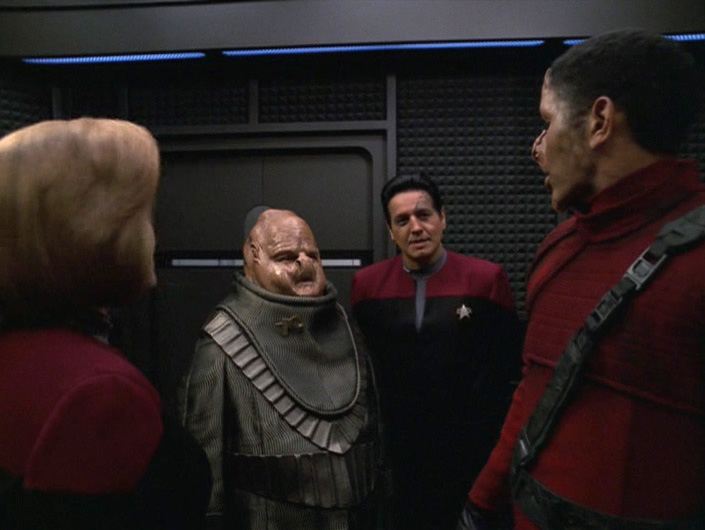
Overview – Janeway and the crew of Voyager continue in their attempt to prevent Henry Starling from using the timeship and causing a disastrous event in the 29th century. Tom Paris and Tuvok discover that Starling has the Doctor (who can now exist outside the holodeck), and together with Rain Robinson try to rescue him. Torres and Chakotay are captured by an anti-Us government group after the shuttle they are in is damaged by Starling’s men. As Starling tries to outsmart Janeway’s crew, they find themselves destined for a showdown that could spell an end to humanity’s future.


Score: 8/10 – The tricky part with multi-part episodes is that it is difficult to keep the pace and energy going from part one to part two. This episode is able to successfully do that for the most part and keeps the action going. We get less of the fish-out-of-water treatment on the crew and more into the story. Torres gets into the action as she and Chakotay are captured by an anti-government militia. This part seemed a bit thrown together, and as I researched this story learned that originally Future’s End was to be a three-part episode (or more) and the militia was to play a bigger role. More might have been nice but trimming down their involvement helps this episode more than hurts it. It is a much more plausible adversary than, say, a gang from the streets of LA. Some great banter between Janeway and Starling, a new technology to expand the Doctor’s character, and some good action sequences all add to a great end to this entertaining story.


Relevance – 2 points. We can’t help but score a point for the Doctor’s mobile holo-emitter, a piece of 29th century technology that will allow our favourite holographic medic to exist out of sickbay. This is a major development for the EMH character as it will allow him to expand his role on the show. He can now be a part of away teams and be present in staff meetings and other ship events, even to the point where he can host concerts. Another point for Captain Braxton, who will next be seen in the fifth season.
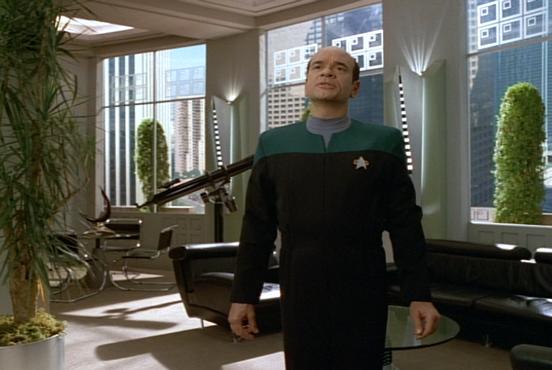

Continuity – 3 points. Story continuity works. I liked how once the timeship was destroyed that Braxton appears as if nothing had happened, and he informs Janeway that he is not familiar his counterpart that they met. Time travel episode are notorious for plot holes, but they seemed to tie up all the loose ends on this quite well. Universe continuity is also good, especially the Temporal Prime Directive that Braxton works under that prevents him from returning Voyager to Earth in their time. For everything we understand about Starfleet and the UFP, this makes perfect and logical sense. Still, it is just like Janeway to ask, just in case, which takes us into the character continuity. In all the circumstances that the crew find themselves in, they respond and act in the ways that fit their characters. Of particular note, the Doctor with his new-found abilities to exist outside a holodeck is particularly amusing. Apparently, Robert Picardo improvised the scene where the Doctor is looking at a leaf, of all things. That is exactly the sort of thing the Doc would do when he would first encounter a leaf. Continuity police should be fine with this episode.


Character Development – 3 points. Obviously, the Doctor gets a great deal of attention with this episode, as the mobile emitter will set him up for a whole new experience. While the Doctor is little more than a bargaining chip in this, it is a significant development for his character that will be further fleshed out in future episodes. Tom Paris builds a closer relationship to Rain Robinson and Tuvok, and the latter Odd Couple pairing continues to work its magic. Torres gets more, Chakotay gets a little less, and Janeway tests her mettle against the unscrupulous and clever Starling, which gives her some great moments. Full points on character development here, with the Doctor’s newfound freedom pushing it ahead of Part 1 in this category.


Social Commentary – 1 point. A lot of the same issues that were brought forward in Part 1 are the main gist in Part 2, and like Part 1 we have the same limited development of them. A great adventure story just does not have as much to say about the world around us.


Cool Stuff – 2 points. The Doctor’s mobile emitter was a cool way of getting the Doctor out of sickbay on a regular basis and added so much to his character that it has to be included in this section. I also have to include Ed Begley Junior and Sarah Silverman for their performances. For Begley, he has been a mainstay in Hollywood for a long time, and this episode was at the beginning of Silverman’s successful stand-up career. For different reasons the appearance of both guest stars was cool, and they do a great job with their roles.


Rank – Captain (19 points). A satisfying end to a fun two-part story that delivers excitement and a taste of home. I loved it and found it fit well with Part 1. Definitely something to watch every time you work your way through the series.


If you would like to read other reviews from Star Trek: Voyager, click on the link here.


If you would like to read an episode review from any of the Trek series, click the following link to get to the series catalog. If the episode you want reviewed has not been done yet, then feel free to request it in the comments and I will see what I can do.


Friday, February 16, 2018

Episode Review - Good Shepherd (Voyager, Season 6)

For those who are new to my episode reviews, you can find the post where I establish my point criteria here


Overview – Janeway and the senior officers receive an efficiency report from Seven of Nine, and three Starfleet crewmen are brought to the Captain’s attention. Crewmen Billy Teffler, Mortimer Harren, and Tal Celes are all, for various reasons, under-achievers. Janeway realizes that none of them have ever been on an away mission. Recognizing that life aboard Voyager makes it difficult to simply reassign them to a more suitable ship or star base, Janeway decides to take them on a routine survey mission in the Delta Flyer. Partway into the mission, however, they encounter a strange life form that soon puts all four of them in danger. As Janeway tries to motivate and inspire this group of misfits, the crewmen find that they are capable of more than anyone, themselves included, could have expected.


Score: 7/10 – There have been many comparisons made between this episode and TNG’s “Lower Decks”. While there are some similarities, I find “Good Shepherd” to be a different take on the story of some junior officers. In this case, these are those who just don’t fit in. Teffler, Celes, and Harren seem to have more in common with Barclay than with Sito Jaxa and Nurse Ogawa. So while in “Lower Decks” we still get to see Starfleet’s finest, “Good Shepherd” gives us a glimpse at the life of the misfits. They are even more screwed up then the former Maquis that are the main focus in “Learning Curve”. The dilemma that Janeway and this trio of misfits encounters is only a backdrop for the Captain in dealing with these difficult crewmen. The efficiency review that sets up this story does give us a new glimpse into the workings of the senior officers, and the opening sequence that takes us from an external shot to the interior of the ship, working our way down into the bowels of the ship and ending with an external view again is quite the scene. Where I find this episode lacking is the knowledge that these characters had some potential to be further developed, but weren’t. This is a reflection of one of Voyager’s weaknesses and based on Voyager’s past history I had little confidence that we would ever see these three crewmen again. There were plenty of opportunities to develop some great secondary characters throughout the series, much like Deep Space Nine did. The misfits in this episode join the ranks of former Maquis, Equinox survivors, and token Starfleet officers that just do not get development enough to make us invest much in them.


Relevance – 1 point. A point is scored for the first episode of Crewman Tal Celes, who we will see again in “The Haunting of Deck 12” and have mentioned again in “Workforce”. Beyond that, there is nothing much more to this episode that makes it importa


Continuity – 3 points. Story continuity is a go here. Nothing contradictory. Universe continuity could have been an issue. Crewman Celes in Bajoran, and it seems that her first name is Tal and listed first, where in traditional Bajoran customs the family name is given first (such as Kira Nerys and Ro Laren). However, in the episode “Ensign Ro”, Ro mentions that some Bajorans switch their name order to better fit in to Starfleet. This is a plausible explanation for Tal’s name, so I can give it a bye here. Character continuity also works well. Janeway definitely combines a mothering instinct with command responsibilities as she takes these three under her wing. I also found the reactions of the senior officers to be in line with their efficient review results. Even Seven grudgingly gives herself a poor score based on Crewman Celes and her inadequate performance, and her annoyance is fitting.


Character Development – 1 point. With the focus being on the Misfit Trio, it is understandable that the main characters are given a passing treatment. Really, while this episode highlights the Trio, this is really a story about Janeway, who is dismayed at the fact that these crewmen fell through the cracks on her watch. She takes it upon herself to assure these three that there is a place on Voyager for them. This category would have scored higher if it seemed that the Trio would have been featured in the future.


Social Commentary – 3 points. Each of the misfits had a different issue when it comes to not fitting in. Celes was incompetent, Teffler was insecure, and Harren was full of himself. We will always find people like them, and sometimes we may be that person. In this episode, we see Janeway make a personal effort to reach out to each of them, and this is a choice we often have to face in our lives. How do we reach out to those on the outside of the team? How do we, if we are the one on the outside, dig deep within ourselves to overcome our perceived inadequacies?


Cool Stuff – 2 points. I scored a point for the creature/alien that possessed Teffler on the away mission. Of course it was the hypochondriac that had the alien crawling around under his skin. I also scored a point for the introductory sequence that followed the various crewmembers from one part of the ship to another.


Rank – Captain (17 points). While I enjoyed “Lower Decks” more as a story that helps us get a glimpse into the lives of lower ranked officers on a starship, I do acknowledge that there is a certain charm to this episode. My only real complaint is that without anything else for these three misfit crewmen to do after this episode, we really have little reason to invest ourselves in them. Contrast to Sito Jaxa in “Lower Decks”, we had every reason to buy into her character because of her back story. Not that “Lower Decks” built their junior officers much more either, but I think this was an opportunity wasted here. Still, overall a good episode.


If you would like to read other reviews from Star Trek: Voyager, click on the link here.


If you would like to read an episode review from any of the Trek series, click the following link to get to the series catalog. If the episode you want reviewed has not been done yet, then feel free to request it in the comments and I will see what I can do.

Friday, January 26, 2018

Episode Review - Time and Again (Voyager, Season 1)

For those who are new to my episode reviews, you can find the post where I establish my point criteria here


Overview – A shockwave gets Voyager’s attention. As the crew searches for its source, they find themselves orbiting a planet that until the shockwave had a fully developed civilization, but is now a desolate wasteland. They discover that the inhabitants of the planet had developed polaric energy as a power source. Polaric energy was a very dangerous energy source that was banned in the Federation due to its destructive nature. As Janeway and some of her officers explore a ruined city, believed to be the center of the explosion, she and Tom Paris find themselves caught in a temporal fissure that places them back in time about one day before the accident. As Janeway and Paris search for a way to prevent the accident from happening, Chakotay and the rest of the crew search for their missing friends. They are assisted by Kes, who seems to have a telepathic ability that allows her to sense the events of the past. As both groups seek to achieve their objectives, Janeway makes an eerie discovery about the cause of the explosion.


Score: 6/10 – As far as first season episodes go, this one is not too bad. We are still trying to learn about the characters (this is only the third episode of the series), and the disaster on the planet serves as a backdrop for this purpose. We see Tom Paris continue to bond with Harry Kim, to the point where he is trying to set them up on a double date. We also see Tom’s relationship with the Captain progress. We see the beginning of the powers that develop within Kes throughout her seasons on the show. We even see the Doctor continue to come to grips with the situation he is in as the sole medical officer on the ship. Added to this is an interesting time travel story, throwing Janeway and Paris into the past and trying to prevent a disaster that they know will happen. While the story itself is fairly generic, it is still fairly good. The idea that Chakotay’s attempt at saving the captain is the ultimate cause of the explosion is an interesting twist. The only thing that is a little off-putting about this is that it is the first of multiple stories where in resolving the issue, they clean the slate of what had happened. In essence, nobody on Voyager will have any memory of this story as by Janeway stopping the rescue attempt she in essence prevents the explosion, which means that the ship doesn’t feel a shockwave and stop to investigate, which means that Janeway and Paris don’t end up back in time and need to be rescued…it gets dizzying trying to follow it. So while the ending can leave people feel a bit lost, overall the show is quite good. Also, the kid in the episode is a bit annoying at times.


Relevance – 2 points. A point scored for giving us the first glimpses of Kes’ extraordinary powers that will continue to develop throughout the series. It might be a bit for naught, however, as all we see in the end is Kes wanting to see the planet and knowing that all is well, though she may not quite understand why she feels that way (which is getting us back to the confusing time-travel logic, so I’ll leave it there). Another point is scored for the first mention of the Delaney sisters. Tom and Harry talk about them quite a lot throughout the series. They almost gain Captain Boday status (he was a character in DS9 that was often mentioned but never seen), but we do eventually see them in season 5.


Continuity – 3 points. Story continuity is a little tough to score. In any time travel episode where we see actions of the future impacting the past (just like we see in the previous Voyager episode “Parallax”), it makes it a little difficult to figure out what is going on and why they don’t remember the events of the episode because they didn’t actually happen, even though they did…OK, this time stuff is making it hard for me to focus. Suffice it to say, even though the time travel stuff makes it hard to follow, the story seems to be intact here, so I will give it a point. Character development is good as well. Neelix tries to help Kes figure out what is affecting her, even though he seems to not believe her. Tom lying to the Delaney sisters about Harry to get a date with them really fits the character. The one thing that raises some questions is Janeway leading the away team. In order to build that character of the captain, it is necessary to have her do this. Having said that, it was established in TNG that the captain usually doesn’t lead away teams anymore, so one could have expected Chakotay to object and insist he lead the team. I do think that ultimately this is very much in line with Janeway’s character. First, there does not seem to be a major threat as there is no longer any life on the planet. Second, Janeway is a scientist, and this sort of away mission is right up her alley. Finally, as we saw in “Caretaker”, Janeway seems to be the type of character that will treat the idea that the first officer should lead most away teams as a suggestion and would rather be on the front line. Finally, universe continuity is intact here, so full marks in this category.


Character Development – 3 points. Lots of character development, even though some of it may not stick due to the nature of time tra…uh, let’s just stop that there. Kes makes some very significant progression with the revelation and foreshadowing that she will develop these psychic powers. This is huge for her character, and fans of hers should see this episode for that reason. Janeway and Paris continue to build upon the groundwork of their professional relationship, and Tom shows some great signs of nobility as he throws himself in the trajectory of a bullet to save a kid. The Doctor also has some great, albeit brief scenes that add some great color to his character. His line about being on the ship of the damned is one of his funniest Season 1 lines. Full points here.


Social Commentary – 1 point. Here is where it becomes as muddied as the trying to figure out the time travel quandary (did they actually go down to the planet?). There is definitely an environmental aspect to the story, which still brings debate as to which forms of energy are harmful to our society. There is also the conundrum of what you would do if you knew a disaster was about to happen. While all these things are interesting to ponder, it is hard to say one way or another what this episode says about us, so I can only justify a single point here.


Cool Stuff – 1 point. The idea that their rescue attempt caused the explosion that drew them to the planet in the first place. Wow, I think I might actually be understanding this time travel paradox here. See, if they hadn’t had been in the Delta quadrant then they wouldn’t have initiated the explosion which Janeway undid by not allowing the rescue attempt to happen, so there was no explosion, and…Ok, I’m stuck again. Well, still a cool, albeit confusing, story ending. Not enough to be cool? OK, the timepiece was original.


Rank – Captain (16 points). Don’t get caught up in the time travel issues that have been plaguing this review, and you might actually find this episode very enjoyable. It sets up Kes’ special abilities and has some clever plot twists.


 If you would like to read other reviews from Star Trek: Voyager, click on the link here.


If you would like to read an episode review from any of the Trek series, click the following link to get to the series catalog. If the episode you want reviewed has not been done yet, then feel free to request it in the comments and I will see what I can do.

Monday, July 31, 2017

Episode Review - Death Wish (Voyager, Season 2)

For those who are new to my episode reviews, you can find the post where I establish my point criteria here


Overview – The crew of Voyager accidentally free a member of the Q Continuum from a unique comet that the rest of the Continuum had imprisoned him over three centuries ago. When Q, known to have caused much mischief to Picard on the Enterprise, arrives, Janeway becomes the arbiter for a hearing to determine if the newly released Q will be imprisoned again or be allowed his one true desire: death. 

Dueling Qs

Score: 9/10 – I really think that this episode is one of the strongest from Voyager’s second season. Since Voyager started, fans have been wanting the ever-popular Q to make an appearance. The issue at stake here was how to do so with a story that was worthy of this monumental occurrence. “Death Wish” gives us that. Creator Michael Piller was given the idea from his son, Shawn, and it provided a way for Q to come to voyager in a way that was not so contrived. By introducing Quinn (which is how I will refer to the suicidal Q from this point on), we are given a reason for Q (played once more with brilliance and wickedly impishness John de Lancie) to appear in the Delta Quadrant. Quinn is fascinating to me as a character. Played by Gerrit Graham (whom we saw previously in DS9’s first season episode “Captive Pursuit”), he is able to grab onto the mischievous quality common to most Q, but brought a bit down to Earth by his weariness with an immortal existence. Most of all, what works best in this episode is the superb on-screen chemistry between Q and Janeway. This is the third captain that Q has tangled with. Picard set the standard and his relationship with Q was always entertaining. Sisko only got one shot, and while he hadnled Q well, from a story point the fire just wasn’t there. With Janeway, Q takes things to a different place. The banter is there, but it is different. This refreshes the character of Q, and the theme of the story being the place of euthanasia in society gives Q an opportunity to change. While much of the rest of the cast is relegated to the background, we get some great scenes for Tuvok and Janeway.

Q(uinn) attempts to end his life...and causes all the men on the ship to vanish

Relevance – 2 points. One point for setting the stage for the rest of the Q-centered episodes that will follow on Voyager. Because of Quinn’s death, Q rethinks his attitude towards the Continuum, and causes him to go back to his rebel ways. Another point is scored for a quick list of Q’s previous antics (most notably introducing the Federation to the Borg).

The game of hide and seek continues

Continuity – 3 points. Story wise this works well. It would make sense that when Janeway hears that “Q” is on the ship, she declares red alert and braces herself for a tough go. Universe continuity also works well, and we get a rare glimpse as to what life in the Q continuum is like. Character continuity is good as well. I thought even Q was true to himself throughout the episode, despite the growth and change he underwent.

Everyone has been the scarecrow

Character Development – 2 points. Q gets the most treatment and growth here, and while he is not a main character on the show, he is a beloved character that now spans three series. While this may not score points in this category, it does deserve a mention. I also feel that Janeway gets some significant development and lays the foundation for what will be an entertaining rivalry between her and Q. Much of the main cast becomes glorified extras here, but Tuvok does get to tangle his logic as he advocates for Quinn.

Best double-face-palm in Trek. Vulcans.

Social Commentary – 3 points. Even today many governments in the world are conflicted by the debate around a person’s right to die. As much as we would like to think that all lives are important, what happens when one is overcome by the pains of life to the point that they want to end it? Does Quinn have a lot to contribute? Of course he does. He would have been invaluable to the Voyager crew. And yet he would have been miserable and therefor chose to end his life. Is this right? That is a hard question to answer and evokes much emotion, but that is what makes the social commentary so relevant. While we continue to grapple with this issue, this episode gives us a lot to consider and helps us better understand both sides of the argument.

The Q Continuum

Cool Stuff – 3 points. Of course we score a point for Q. The show is almost always a bit more special when this omnipotent rascal blips onto the screen. John de Lancie is true form and pulls off one of his better outings as Q. I enjoyed the exploration of the Q Continuum itself, with its whimsical portrayal of the long highway, with various Q playing the different parts, from the dog to the scarecrow. I also award a point for the appearance of Q’s witnesses. Issac Newton appears again (this time as a non-holographic entity) and we get to see William T. Riker again (it’s always nice to see Johnathan Frakes), but I love how the second witness, the hippy responsible for saving Woodstock, is named after the actor that plays him. The story goes that the character had a different name, but upon meeting actor Maury Ginsberg, the Michael Piller loved his name so much that they changed it in the script. This makes him the second character to share the same name as the character, but the first person to have that honor for a character that was not himself (Stephan Hawking played himself in a TNG episode). That’s a bit of obscure trivia for your day!

The witnesses are called


Rank – Admiral (22 points). This is definitely a must watch and shows some of the strength in Voyager. Q was such a popular character on TNG that fans had been clamoring for his return in every follow-up series. While his appearance on Deep Space Nine was not terrible, it was only decent at best. On Voyager, however, they were able to bring him into the show in a way that was more than just another Q running a muck episode. This episode is Star Trek at its best.

The comet where Quinn was found

If you would like to read other reviews from Star Trek: Voyager, click on the link here.


If you would like to read an episode review from any of the Trek series, click the following link to get to the series catalog. If the episode you want reviewed has not been done yet, then feel free to request it in the comments and I will see what I can do.

Thursday, April 6, 2017

Episode Review - The Void (Voyager, Season 7)

For those who are new to my episode reviews, you can find the post where I establish my point criteria here


Overview – Voyager gets pulled into the Void, a region of space where there are no stars, planets, or other special anomalies. Upon arrival they find themselves attacked by an alien ship and have much of their deuterium and food supplies. It soon becomes apparent that there are several ships in the Void, and in order to survive ships attack new comers for their supplies. Janeway seeks to establish an Alliance between different ships, seeking to work together to find a way out. Meanwhile, the Doctor befriends a member of a mysterious new species who learns to communicate through music.

Voyager being pulled into the Void

Score: 8/10 – I really enjoyed this episode. It is an interesting, if not ironic episode. The original premise of Voyager was the ship would find itself flung to a strange area of space and have to scavenge for supplies. Well, in the Void, they must do that to the extreme. I like how when the crew find themselves in this situation, they just roll up their sleeves and get to work without much angst or panic. I also liked how the values of the Federation win out in the end, and that cooperation between different species is what gets them through this trial. I also really liked the concept of Fantome and his species. While it is a little far-fetched, it is a creative deviation from the norm. Having the Doctor take him under his proverbial wing and discover that his species can communicate via musical notes is a nice change.

Discussing among allies

Relevance - 1 point. We see the Hierarchy again, using their espionage tools to help Voyager and their new alliance. Other than that, this episode could almost stand alone.

Phantome

Continuity - 3 points. Character continuity was a bit hard for me on this. While I totally get Chakotay voicing a concern that trying to establish a version of the UFP in the Void was risky, Tuvok sharing those ideas surprised me at first. I would have expected him to fully support Janeway without question as Tuvok is a long-standing Starfleet officer. Reflecting further upon it, however, Tuvok does show a great deal of support once the Captain has made her mind up, so I can ultimately score the point here. Story continuity and universe continuity also are upheld here.

Anari captain Valen

Character Development – 2 points. Janeway shows that she will seek to uphold Federation values and standards wherever she finds herself. She faces some doubt and second guessing again, but this is one of Janeway’s most endearing qualities. She shows conviction, even when Chakotay and Tuvok are united in a suggestion that the Federation way of doing things may not be the best. Even when faced with a failure and setback, Janeway kept her faith in the values of the Federation. The Doctor also gets some good moments as the mentor of Fantome, helping him discover a love and use for music.

The Doctor has learned to communicate with Phantome

Social Commentary – 3 points. While the message is not very subtle, it is very important, especially today. The United Federation of Planets is based on the idea that different cultures can work together in spite of their differences. In today’s world we seem to need this message even more. We are becoming increasingly divided along national, ethnic, and political lines, and yet when we need to recognize that we are stronger when we come together in peaceful cooperation.

Welcoming a new alliance member

Cool Stuff – 1 point. Fantome gets a point. He is played by Johnathan Del Arco, who we previously saw as the Borg who found his identity, Hugh. His ability to quickly adapt musical notes and transform it into a language, which he then teaches to other members of his species, is quite impressive.

The Allied fleet

Rank – Captain (18 points). A strong episode for Voyager’s final season. After having seen on past occasions the attempts at alliances falter, it is refreshing to see it work. Definitely one to watch, although if you do miss it you don’t lose track of the overall story.


The Void

Saturday, April 1, 2017

Episode Review - Caretaker (Voyager, Season 1, Pilot)

For those who are new to my episode reviews, you can find the post where I establish my point criteria here


Overview – Captain Kathryn Janeway takes command of the USS Voyager, sent on a mission to capture the Maquis leader Chakotay. Recruiting disgraced former Starfleet officer Ton Paris, she and her crew disembark from Deep Space Nine and head towards the Badlands. A mysterious force propels her and her crew to the far reaches of the Delta Quadrant, over 70 000 light years away. The crew find themselves at the mercies of a strange alien life form known only as the Caretaker. The Caretaker has been bringing ships from all over the galaxy in search of a compatible individual who can help restore control of a large array that provides assistance and protection to the Ocampa, a race of short-lived humanoids. In an attempt to get themselves home, Janeway and Chakotay join forces. Assisted by local scavenger Neelix and his Ocampan companion Kes, Janeway is forced to make a choice between returning home and protecting the Ocampa from the Kazon. Thus we begin the 70 year journey of the USS Voyager.

On the Ocampan homeworld

Score: 8/10 – This is arguably one of the strongest Trek series pilots. A solid story that establishes the characters and the main premise of the series. We are introduced to a strong captain, and the first time a woman helms a new series. There is a great balance between humor, action, and mystery. We have some great visual effects and some intriguing new characters. We see a new ship design in Voyager, the Intrepid class vessel. New technologies are introduced that add some new elements to the Trek universe. Most notable among these is the Emergency Medical Hologram, which we will get to know better as, simply, the Doctor. Most interesting in this series is the merging of two different crews. Taking a page from Deep Space Nine’s book, the Maquis and Starfleet crews take the two crews-one ship/station theme to a new level. As the Maquis are largely former Federation citizens that are considered to be traitors to Janeway’s people, this provides the potential of some interesting conflict. There are a few things that could have been better. Some of the dialogue is a bit contrite (I’m thinking mostly of the farm scenes), and as always there are a few of the actors that are still trying to find their legs in their new characters. Still, “Caretaker” is a great episode that starts off the series with strength.

Some of the soon to be replaced Voyager bridge officers

Relevance - 3 points. Let us set aside that this episode sets the stage for the next seven seasons and look at how the pilot episode of Voyager is relevant to the rest of the Trek universe. We have Gul Evek, seen on DS9 and TNG. The Maquis, which were introduced in DS9 and featured in TNG, are part of the backbone of the new crew. In fact, they were created with the intent that they would play an integral role in Voyager. All of the Cardassian/Maquis conflicts helped set up for this “Lost in Space” version of Star Trek. Added to this the introduction to all the main cast members for the next three seasons, plus a fun cameo by Armin Shimmerman as Quark, and Relevance scores all three points.

Quark makes Kim an offer

Continuity - 3 points. Character continuity gets a point here, but that is hardly surprising as the pilot lays the groundwork for the characters. Even the familiar characters (Gul Evek, Quark) are true to themselves. Story continuity works. Trek universe also gets a point here.

Chakotay and Torres avoiding the Cardassians

Character Development – 3 points. Another strength of a pilot episode is laying the ground work for this cast of characters. Janeway, of course, gets the primary focus. Her fierce determination is balanced with compassion. She is a professional officer that has a heart full of curiosity about the unknown. She is dedicated to the principles of Starfleet and the Federation, which is demonstrated as she attempts to broker peace with the Kazon through diplomacy, and then resorts to force to protect the Ocampans when diplomacy fails. Added to this, we learn a lot about Tom Paris, a disgruntled failed officer who is most at home behind the navigation console of a starship. Harry Kim is the eager to please ensign fresh out of the Academy. Tuvok, as is typical for Vulcans, is logical, loyal, and intelligent. Chakotay shows a great mix of freedom fighter courage tempered with Starfleet training. B’Elannna Torres, the half-human half-Klingon Maquis showcases her conflicted personality. Kes is curious and adventurous, eager to explore the universe in her short lifespan. Neelix is quirky and resourceful. The Doctor gets a great start as one of the more unique characters. His dry wit and sarcasm promise us some great moments to come.

Neelix comes aboard for the first time

Social Commentary – 2 points. I think the biggest topic addressed here is the idea of when to sacrifice your own needs for the greater good of someone else. Janeway could have left the Ocampans to their fate in order to get her crew back to the Alpha Quadrant. It was a great sacrifice to destroy the Caretaker’s array that would ultimately come with a steep price, one that grew with each passing casualty. While Janeway has received much criticism for her choice over the years, she was ultimately staying true to herself and her sense of morality.

The Caretaker's true form

Cool Stuff – 3 points. One point for the Caretaker, which is an intriguing lifeform. Another point scored for the EMH. What a brilliant idea to turn a temporary holographic character to be used as the vessel used to explore the human condition. Finally, a point scored for Scott MacDonald, who appears as his only human character out of five memorable characters (so far) in the Trek franchise. If that is not enough, the entire Quark’s sequence is a lot of fun, and is one of the best pilot episode cameos.

The crew being screened for compatability

Rank – Admiral (22 points). Of course this is a must see episode. Not only is it the pilot, it is very well made. More than any other pilot in the Trek series, this made me the most excited for the show that was to come.

Voyager and the Caretaker Array