Monday, August 14, 2017

Celebrating 30 Years of the Next Generation


This September marks the 30th anniversary of one of television’s most beloved shows. Star Trek: The Next Generation debuted in syndication in 1987 and opened the world to Gene Roddenberry’s vision of the future started just over 20 years before. Star Trek was one of those shows that became a cult favourite and helped shape television for decades to come, but aside from the movies and dozens of stories told in comics and novels, the story of the United Federation of Planets was limited to the original starship Enterprise and her crew. Names like Kirk and Spock had become household, “beam me up” was a popular phrase, and most people knew the iconic ship. Yet the actors from the original crew were aging, and the idea for a new series set in the universe was being kicked around. Various studios were approached, but it wasn’t until Paramount Studios approached Gene Roddenberry with the idea that the show would run on syndication that true traction was gained. Being syndicated freed up the producers of the show from the demands of network television and opened up several possibilities in distribution. Gene was promised that he would be in charge, and the go ahead was given. A new crew would be running a new Enterprise, set close to a century after the adventures of Kirk and company, and fans were anxiously holding their breaths.


Many were skeptical of a new crew on a new ship. Every element that was released was criticized by some. There were some among the critics and fanbase that felt the new show was doomed from the start. Even the actor hired to play the new captain, British actor Patrick Stewart, thought they would be cancelled soon, to the point where he lived out of his suitcase for the first few months of the series. People thought that the new uniforms were bad (what, give the captain a red uniform?!), the ship was not right, and that the characters were going to be dull. I mean, an android and a Klingon on the bridge? Did they learn nothing of Kirk’s missions? In spite of the criticisms, there was also much eager anticipation from the fans. For almost two decades the only way they could watch Star Trek was on reruns and in the movie theaters, but at last they were getting new Trek! While there were plenty of doubters, the majority of fans were willing to give the new show a fair chance.


September 28, 1987 saw “Encounter at Farpoint” air for the first time. I remember it well. I had recently started the seventh grade, and soon TNG night was a family staple in my home. My parents had raised us on Star Trek. I had seen all of the movies and watched many of the original episodes on television. I loved “The Trouble with Tribbles” and “Amok Time”. I was excited to see something new. We gathered in the basement of our acreage home and adjusted the rabbit ear antennae so that the picture came in clearly. As a young boy just beginning his journey into adolescence, my eyes were wide with wonder and amazement. Seeing the Enterprise in the opening shot gave me chills. I hoped that I was watching the beginning of something special, and I was indeed, although it would take a few years for me to realize it. We met Captain Jean-Luc Picard, his first officer William Riker, and a host of characters that would soon become like family to me. There was the android officer, Data, who wanted to be human more than anything else. Deanna Troi was the emotion-reading empath and councillor on the ship. Tasha Yar became an early favourite of mine as I loved watching this tough-as-nails lady kick butt. Geordi La Forge was the blind helmsman that soon became one that I identified with the most. Doctor Beverly Crusher balanced drive with compassion, and I must admit that I loved how her teenage son, Wesley, was able to be a part of the adventure. Ah, and there was Worf, the stoic Klingon officer who showed us that our enemies can indeed become our allies. In the pilot episode we met Q, the omnipotent trickster who put Picard and his crew on trial for the crimes of humanity. Little did we know how important this imp would be in the series. I was overjoyed when Admiral Leonard H McCoy appeared in his cameo, and was happy to know that the old crew was not forgotten. When the two hours was finished, my family and I talked about how great it was to have new Star Trek on the television. We looked forward to next week’s episode.


I was used to having many of my favourite shows get cancelled sooner than I would have liked, so I was expecting a few seasons of TNG before it was done. Happily, I was wrong. As I look back on the early seasons, I admit that some of the episodes were downright cringe worthy. In particular, “Justice” stood out to me as something that was just off, but I still watched it when it aired in reruns. Still, for every “Code of Honor” there was an episode that really entertained me, like “Where No One Has Gone Before”. While I missed seeing more of the Vulcans and Andorians, I was happy to see some new aliens appear. Some, like the Binars, came and went. Others, such as the Ferengi, changed a lot over the next few years. Then there were the classics, such as the Borg and the Cardassians, that were just great. The characters in particular came to mean a great deal to me. Before TNG came around, I remember crying only once at the death of a character. That was Spock. Well, after “Skin of Evil”, you can add Tasha Yar to that list. While we only knew her for a short time, the other main cast became like members of the family to us. We loved watching each one grow and develop into cultural icons. Soon, Picard became as famous as Kirk was, and it launched Patrick Stewart’s career into the stratosphere. Indeed, we enjoyed living the adventures of all of our main cast. Some were more loved than others (sorry Wesley), but in our home, we wouldn’t want to have changed any of them.


It wasn’t just the main cast that became important to us. Each season we looked forward to visits from Lwaxana Troi (played by Gene’s wife, Majel Barret), who chewed up each and every scene that she was in. Some of the crew members became favorites as well. There was the ever-awkward Lt. Barclay, the strong-willed Bajoran helm officer Ro Laren, and the ever-reliable Miles O’Brien (who would go onto becoming a key cast member of Deep Space Nine). There were some villains as well that would appear again and again to torment the crew. In addition to an almost annual visit from Q, the crew faced off against Data’s evil brother Lore, the Duras family, and Sela, the half-Romulan daughter of their former crewmate Tasha Yar. Of course, the best recurring character (in my opinion) was Guinan. Portrayed by Oscar winner Whoopi Goldberg, Guinan was created by Gene Roddenberry especially for her. She was the mysterious and wise hostess of Ten Forward. Goldberg was a huge Star Trek fan, and told her friend Levar Burton that she wanted to be on the show. Each time she appeared she gave us a memorable moment. Yes, the characters on TNG were, for the most part, fabulous.


One cannot look back at seven years of TNG and not acknowledge the bumps in the road. The show had some issues early on. Soon, Roddenberry lost some of his creative control, though he still left his mark in many good ways. Michael Piller and Rick Berman took over many of the production details, and soon the writing became top notch. While initially there were many who doubted that the magic of the original series could be recaptured, it soon became apparent that such worries were not warranted. Star Trek had always been known for being able to tackle important social issues by using science fiction and alien worlds to remind us of what was happening in our world. They tackled topics such as sexual identity, terrorism, and inherent rights of the individual. We explored the human condition as we explored the universe. We learned about us as we learned about alien species and technological gadgets.


As the show improved, the show did something that nobody ever expected it to do: it became a ratings juggernaut. The fanbase for the show grew and grew. It was unheard of for a syndicated show to start hitting #1 in many markets, but that is what happened. The Next Generation became a phenom unto itself and was taking down some of the heavy hitters in ratings, including the seemingly unbeatable Monday Night Football. As the fanbase grew, more people became familiar not just with this incarnation of the show but of the original series as well. This was in part due to the inclusion of some legendary characters (namely Sarek, Scotty, and Spock). The fan base was growing, and all things Trek were looking bright. In 1991, we celebrated a quarter century of Star Trek with Leonard Nimoy appearing on a special two-part episode and the sixth feature film featuring the Original Crew. TNG was drawing a huge audience and a third series, Deep Space Nine, was in the works. Sadly, in October of that year, we lost the Great Bird of the Galaxy and the Father of Trek. Gene Roddenberry passed away, leaving behind millions of grieving fans and a legacy of a future that was optimistic of our chances. While I mourned the loss of Gene, I was happy that he left behind a legacy of not just the original Star Trek, but the Next Generation as well.


So, this September, I encourage you to look up your favourite TNG episodes. Whether it is the “Inner Light”, “Yesterday’s Enterprise”, “Darmok”, “Relics”, “The Measure of a Man”, or “The Best of Both Worlds”, enjoy the show that truly brought the next generation of Trek fans into the fold. May the lessons of this show continue to live long that we may all prosper.


To continue the celebration, for the next ten weeks I will guarantee an episode review of TNG. I will be selecting some of the episodes that are considered to be among the best and most popular. If there is one that you would like me to do, please leave your request in the comment section.  

Friday, August 11, 2017

Episode Review - The Tholian Web (Original Series, Season 3)

For those who are new to my episode reviews, you can find the post where I establish my point criteria here.


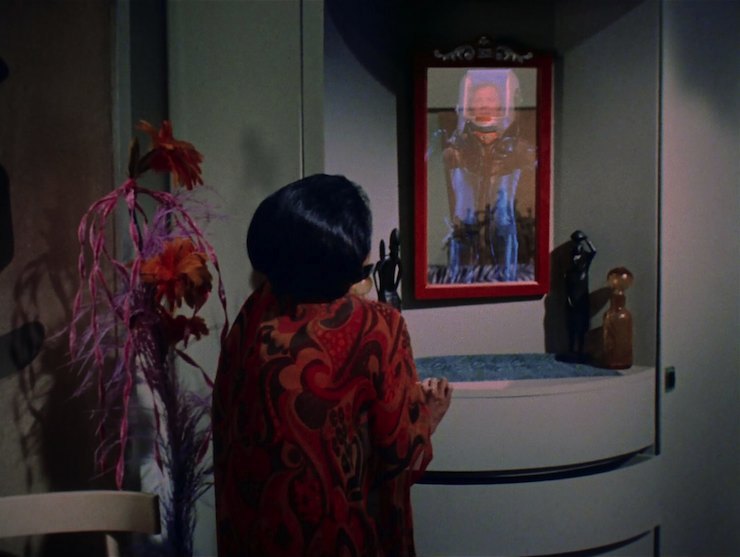
Overview – The Enterprise discovers the missing USS Defiant in unknown space, its crew dead from apparent madness. As Kirk and the away team continue to search the ship, they discover that the ship is phasing out of time and space. With limited power, Scotty can only beam aboard all but one of the away team at once. Kirk chooses to stay behind, and after the others return to the Enterprise, the Defiant disappears. Spock, believing that he can still rescue the captain, chooses to remain. Symptoms of the madness that killed the crew of the Defiant begin to manifest in the Enterprise crew. While McCoy and Spock clash over command, a new threat in the form of the mysterious and dangerous Tholians arrives. As they begin to weave a deadly web around the Enterprise,Spock must make the decision to risk the ship for her captain or abandon his friend for the safety of all.


Score: 9/10 – This is a favourite among fans, and for good reason. In a third season that had a fair number of duds, this one shines brightly. We see a new and different alien threat in the Tholians, and the web weapon they employ is refreshing and original. There is mystery and suspense as we wonder if and how the crew can rescue Kirk. We get conflict not just from the Tholians, but between Spock and McCoy. The two to clash like they have never before, showing how much of a balance Kirk was to his two friends. Indeed, it is a touching final message in a recording Kirk made in the event of his death that brings the two together. We get to see all the main characters in this episode, which includes what is affectionately referred to as the token Chekov scream scene. The acting is good,and the special effects are good for the era (although check out the remastered version). I also enjoyed the ending where Spock and McCoy play a joke on Kirk. It ended the episode with just the right amount of levity, especially after the two had come into conflict during this episode. A very solid and entertaining episode.


Relevance – 2 points. One point is scored for these events being referenced by Kirk (in Janice Lester’s body) in “Turnabout Intruder” as he tries to convince Spock that he is truly Kirk. A second point, and a big one at that, for the Enterprise two-part adventure “In a Mirror Darkly”, which also acts as a prequel to “Mirror, Mirror”.


Continuity – 3 points. The character continuity is good here, as McCoy and Spock both come to words as Spock takes command in Kirk’s absence and possible demise. Spock uses logic, McCoy runs on emotion, and together find a way to make it work. Story continuity is maintained, as is universe continuity. Full points in this category.


Character Development – 3 points. This is definitely a Spock-McCoy episode. The two having to come to terms with Kirk’s death, and it leads to contention between the two reaching higher levels. I like how Kirk, via a recorded message, is able to bring balance to the two yet again. Spock has difficult choices to make, as this is possibly the first time that he believes he may actually have to replace his friend. McCoy, meanwhile, becomes very belligerent towards Spock, and seriously oversteps his bounds. He has to adjust to having the only person on the ship that was arguably equal in authority now be in command. It was easy at the beginning of this to berate Spock over his actions as he was accustomed to it, but as Spock continued to exercise his authority, McCoy had to learn to lay off a bit. It was a great learning experience for the two officers.


Social Commentary – 2 points. When someone important in your life is suddenly gone, it is often difficult to come together and move on. This is the big take home message from this episode for me. Spock does so with calmness and cool logic. McCoy has a more emotional reaction and needs to be brought down to Earth a bit. Still, as Kirk reminds his friends, it is imperative that we do our best to unite instead of pulling apart.


Cool Stuff – 2 points. A point is definitely scored for the Tholians. Their look, their ship, their web weapon, everything. I liked how the writers and producers gave the Tholians a distinct look. Yes, the Tholian was simply a mask, but it gave us a memorable visual. I also score a point for the effects used with the ship and Kirk phasing in and out.


Rank – Admiral (21 points). Hey, they call these episodes “classics” for good reason. Seriously, if this episode is not in your Top 10 of Original Series, then it better have just missed the cut.


If you would like to read other reviews from the Original Series, click on the link here.

If you would like to read an episode review from any of the Trek series, click the following link to get to the series catalog. If the episode you want reviewed has not been done yet, then feel free to request it in the comments and I will see what I can do.


Monday, August 7, 2017

Episode Review - Armageddon Game (Deep Space Nine, Season 2)

For those who are new to my episode reviews, you can find the post where I establish my point criteria here.


Overview – Doctor Bashir and Chief O’Brien are on T’Lani Prime, assisting in the destruction of the Harvesters, a deadly biochemical weapon. As they work with scientists on both sides of a deadly war, Kellerun soldiers appear and start killing everyone. O’Brien and Bashir escape and are now hunted men. Meanwhile, back on the station, Sisko is informed by the ambassadors of the two sides that Bashir and O’Brien are dead following an unfortunate accident. Keiko, upon viewing the data recording of the incident, finds her husband’s actions a bit hard to believe, and soon has Sisko looking for answers.


Score: 7/10 – This is a fairly good episode from DS9’s second season. It has some suspense as O’Brien and Bashir go on the run. Miles being infected by the Harvesters adds to the tension, and the two are forced to work together to survive the ordeal. While the writers try to add to the tension with this standard plot device (incapacitate one character so they have to rely on each other to survive), the audience knows full well that neither of these main characters is going to die. Still, it is fun watching them bicker, open up to each other, and eventually trust each other. This episode, while not the first time these two characters have been paired together (that happened in the previous season’s “Storyteller” as well as racquetball combatants in the earlier episode “Rivals”), it is considered to be the beginning of the friendship that will develop between the two and become very significant over the rest of the series. There is some action, intrigue, and a few plot twists. While the storyline is fairly generic (really, you could have made an almost infinite number of stories by pairing up any two random characters), it works because O’Brien and Bashir have such great chemistry. The relationship that is started here will become one of the most realistic friendships in the franchise. There are also some nice plot twists near the end, with the final one being delivered in the closing seconds. Keiko, when she was informed of her husband’s apparent death, found that her husband was drinking coffee in the afternoon. She insists that he would never drink coffee this late in the day, and insists that the recording she saw must be a fake. This is what starts the rest of the crew on the road to rescuing O’Brien. It turns out, in the end, that Keiko was completely wrong about her husband (he does drink coffee in the afternoon), showing us that the day was saved because Keiko didn’t know her husband as well as she thought she did. Some fans love that twist, others hate it, but it definitely leaves its mark.


Relevance – 1 point. As I mentioned above, this is where the O’Brien-Bashir friendship truly begins. In previous episodes where they are paired up, it is either as rivals or in a situation that really doesn’t give them a reason to set aside differences. If you are a fan of this friendship, then you need to see this episode to watch how it all began.


Continuity – 3 points. Character continuity is always at risk when you do a story like this. People want a believable reason for two characters as different as the engineer and the doctor to get along, and the writers pull it off. Story wise everything checks out. A point is scored for universe continuity as well.


Character Development – 3 points. Definitely some big things start with the pairing of Miles and Julian. Before this episode, Miles really couldn’t stand the young, cocky doctor. It is understandable as the two have very different personalities. Then, as the story unfolds, the two starts to put aside their differences and must work together. O’Brien really shines initially as the action begins, using his military background to save himself and the good doctor. Clearly in the emergency, Bashir is out of his element. Bashir also gets some great growth, including even more respect for O’Brien. He opens up about himself and his past. Mostly, this episode does a fine job of contrasting these two. O’Brien is the realist, down-to-Earth family man, while Bashir is the starry-eyed, naïve dreamer who loves the freedom in his single status. It gives us exactly what we want from these two. We also have some good moments as the rest of the crew grieve the loss of their friends and colleagues. Most notable is Quark, who in his brief appearance adds more heart to his character than in almost the entire first two seasons combined. As only a Ferengi could, he honors his two cherished customers who always paid their bills.


Social Commentary – 2 points. Working together with someone who is totally different from you often leads to a sense of respect. Unlike other encounters between the two, O’Brien ends this episode with a newfound respect for Bashir. While such situations may not always lead to a fast friendship, this episode shows that it can.


Cool Stuff – 0 points. This is where this episode comes up a bit short for me. There are many good things about this episode, but try as I might, I just can’t think of anything that is really “cool”. The aliens look fairly run-of-the-mill for Star Trek at the time, the sets are standard, and the storyline is routine.


Rank – Captain (16 points). This is an enjoyable episode. Great writing and acting by Colm Meaney and Alexander Siddig take an otherwise typical storyline and make it a fun episode. This is a must see for Season 2.


If you would like to read other reviews from Star Trek: Deep Space Nine, please click the following link.

If you would like to read an episode review from any of the Trek series, click the following link to get to the series catalog. If the episode you want reviewed has not been done yet, then feel free to request it in the comments and I will see what I can do.

Thursday, August 3, 2017

Episode Review - Cold Front (Enterprise, Season 1)

For those who are new to my episode reviews, you can find the post where I establish my point criteria here


Overview – The Enterprise, on their way to a stellar nursery, picks up a group of Borothan pilgrims that have come to see the Great Plume of Agosoria. A plasma storm hits, and the Enterprise is nearly destroyed if it had not been for the actions of an unknown person who disconnected an antimatter conduit. This is when one of the Enterprise’s crewman, Daniels, reveals to Archer that he is a temporal agent sent from nine hundred years in the future to stop the Suliban Silik from meddling with history. Before long, Archer finds himself in the center of a struggle in the Temporal Cold War.


Score: 8/10 – Ah, Cold Front. Our second foray into the story arc that was the Temporal Cold War (or “TCW” as I will refer to it from here on in). I am not quite sure why the TCW didn’t click better with the fans, but this episode is quite good. They give us a fair amount of suspense and action. We finally get to learn the name of the Suliban leader from “BrokenBow” (Silik), and we are introduced to Daniels, who represents a “stabilizing” force in the TCW. We learn a few things outside of the TCW as well. Religion takes its place on the stage. It has long been debated by Trek fans what role Earth religions should have in Star Trek. Well, we learn that in the 22nd Century religion is still being practiced on Earth. Phlox, who is intrigued by all forms of religion, tells us that he has attended a Catholic mass and visited a Buddhist monastery. Archer, when asked about his religious views, diplomatically stated that he likes to keep an open mind. I think this is the best and most balanced stand that Star Trek could have taken on Earth religions, while acknowledging that this likely would not have met Roddenberry’s approval. The character of Daniels is interesting, although I must admit that I would have liked it if we had seen him a bit more in earlier episodes. I think the idea of an unassuming crewman that we had seen for several episodes suddenly being a central figure in the CTW would have made the revelation even stronger. So while we did not get a lot of meat in this episode, it builds for future storylines and gives us an intriguing character.


Relevance - 3 points. Right in the introductory scene we score a point as Silik is having some of his enhancements removed for his previous failure. This takes us back to the pilot, “Broken Bow”. Another point is scored for the introduction of Daniels, who will appear in a total of 8 episodes that spans the entire 4 seasons. While Daniels may not be the best of recurring characters (that would be Shran), he is an interesting guy that may or may not be one of the good guys in the TCW and it builds for future glimpses into the TCW. A third point is scored for the debut of movie night, where the crew of the Enterprise gather to watch old Earth movies. They have 50,000 titles in their database. The classic they start with? Night of the Killer Androids. Ah. I personally would have suggested the 1977 classic Star Wars myself.


Continuity – 3 points. Some may argue that the inclusion of Earth religions still being practiced in the 22nd century goes against the Universe continuity as that was a belief held by Gene Roddenberry. Let me point out that while this episode may have been the most explicit in detailing religious beliefs of the 22nd century, it is not the first. Kirk’s Enterprise had a non-denominational chapel where weddings could have been held. So, while this may not have met with Gene’s approval, I feel that the universe continuity is still maintained here. Story wise, things go well, although with Daniels being “killed” and then showing up again later in the season finale there might be something to take a closer look at. All characters are acting the way we would imagine. I totally buy Phlox being a student of different religions. Archer especially jumps from diplomat to skeptic to hero quite well.


Character Development – 2 points. There is definitely an Archer focus in this episode. This continues Archer’s importance in the timeline and will be built upon throughout the series. While T’Pol and Tucker are also part of the inner circle who know what is going on, only T’Pol really benefits from any development. This is due to her stated skepticism of time travel which is common among Vulcans. This is not a major development for her at this point, and we see little else in the development of the other characters.


Social Commentary – 1 point. As much as I enjoyed this episode, I cannot find much about social commentary in it. There is something said about religion in this episode, and it seems that both following a particular religion and not are treated with respect. This is only a minor aspect of the overall story, so I cannot really it score it much more than a token point.


Cool Stuff – 2 points. I have to score a point for the technology that Daniels shows Archer and how it is used in the temporal timelines. I will give another point for the Great Plume of Agosoria.


Rank – Captain (19 points). A good to excellent episode (depending a personal preferences), but it is definitely one should watch when going through the series. It does a very good job at continuing the TCW story line and establishing a recurring character on Enterprise in a different way.


If you would like to check out my other episode reviews for Enterprise, simply click here.

If you would like to read an episode review from any of the Trek series, click the following link to get to the series catalog. If the episode you want reviewed has not been done yet, then feel free to request it in the comments and I will see what I can do.

Monday, July 31, 2017

Episode Review - Death Wish (Voyager, Season 2)

For those who are new to my episode reviews, you can find the post where I establish my point criteria here


Overview – The crew of Voyager accidentally free a member of the Q Continuum from a unique comet that the rest of the Continuum had imprisoned him over three centuries ago. When Q, known to have caused much mischief to Picard on the Enterprise, arrives, Janeway becomes the arbiter for a hearing to determine if the newly released Q will be imprisoned again or be allowed his one true desire: death. 

Dueling Qs

Score: 9/10 – I really think that this episode is one of the strongest from Voyager’s second season. Since Voyager started, fans have been wanting the ever-popular Q to make an appearance. The issue at stake here was how to do so with a story that was worthy of this monumental occurrence. “Death Wish” gives us that. Creator Michael Piller was given the idea from his son, Shawn, and it provided a way for Q to come to voyager in a way that was not so contrived. By introducing Quinn (which is how I will refer to the suicidal Q from this point on), we are given a reason for Q (played once more with brilliance and wickedly impishness John de Lancie) to appear in the Delta Quadrant. Quinn is fascinating to me as a character. Played by Gerrit Graham (whom we saw previously in DS9’s first season episode “Captive Pursuit”), he is able to grab onto the mischievous quality common to most Q, but brought a bit down to Earth by his weariness with an immortal existence. Most of all, what works best in this episode is the superb on-screen chemistry between Q and Janeway. This is the third captain that Q has tangled with. Picard set the standard and his relationship with Q was always entertaining. Sisko only got one shot, and while he hadnled Q well, from a story point the fire just wasn’t there. With Janeway, Q takes things to a different place. The banter is there, but it is different. This refreshes the character of Q, and the theme of the story being the place of euthanasia in society gives Q an opportunity to change. While much of the rest of the cast is relegated to the background, we get some great scenes for Tuvok and Janeway.

Q(uinn) attempts to end his life...and causes all the men on the ship to vanish

Relevance – 2 points. One point for setting the stage for the rest of the Q-centered episodes that will follow on Voyager. Because of Quinn’s death, Q rethinks his attitude towards the Continuum, and causes him to go back to his rebel ways. Another point is scored for a quick list of Q’s previous antics (most notably introducing the Federation to the Borg).

The game of hide and seek continues

Continuity – 3 points. Story wise this works well. It would make sense that when Janeway hears that “Q” is on the ship, she declares red alert and braces herself for a tough go. Universe continuity also works well, and we get a rare glimpse as to what life in the Q continuum is like. Character continuity is good as well. I thought even Q was true to himself throughout the episode, despite the growth and change he underwent.

Everyone has been the scarecrow

Character Development – 2 points. Q gets the most treatment and growth here, and while he is not a main character on the show, he is a beloved character that now spans three series. While this may not score points in this category, it does deserve a mention. I also feel that Janeway gets some significant development and lays the foundation for what will be an entertaining rivalry between her and Q. Much of the main cast becomes glorified extras here, but Tuvok does get to tangle his logic as he advocates for Quinn.

Best double-face-palm in Trek. Vulcans.

Social Commentary – 3 points. Even today many governments in the world are conflicted by the debate around a person’s right to die. As much as we would like to think that all lives are important, what happens when one is overcome by the pains of life to the point that they want to end it? Does Quinn have a lot to contribute? Of course he does. He would have been invaluable to the Voyager crew. And yet he would have been miserable and therefor chose to end his life. Is this right? That is a hard question to answer and evokes much emotion, but that is what makes the social commentary so relevant. While we continue to grapple with this issue, this episode gives us a lot to consider and helps us better understand both sides of the argument.

The Q Continuum

Cool Stuff – 3 points. Of course we score a point for Q. The show is almost always a bit more special when this omnipotent rascal blips onto the screen. John de Lancie is true form and pulls off one of his better outings as Q. I enjoyed the exploration of the Q Continuum itself, with its whimsical portrayal of the long highway, with various Q playing the different parts, from the dog to the scarecrow. I also award a point for the appearance of Q’s witnesses. Issac Newton appears again (this time as a non-holographic entity) and we get to see William T. Riker again (it’s always nice to see Johnathan Frakes), but I love how the second witness, the hippy responsible for saving Woodstock, is named after the actor that plays him. The story goes that the character had a different name, but upon meeting actor Maury Ginsberg, the Michael Piller loved his name so much that they changed it in the script. This makes him the second character to share the same name as the character, but the first person to have that honor for a character that was not himself (Stephan Hawking played himself in a TNG episode). That’s a bit of obscure trivia for your day!

The witnesses are called


Rank – Admiral (22 points). This is definitely a must watch and shows some of the strength in Voyager. Q was such a popular character on TNG that fans had been clamoring for his return in every follow-up series. While his appearance on Deep Space Nine was not terrible, it was only decent at best. On Voyager, however, they were able to bring him into the show in a way that was more than just another Q running a muck episode. This episode is Star Trek at its best.

The comet where Quinn was found

If you would like to read other reviews from Star Trek: Voyager, click on the link here.


If you would like to read an episode review from any of the Trek series, click the following link to get to the series catalog. If the episode you want reviewed has not been done yet, then feel free to request it in the comments and I will see what I can do.

Friday, July 28, 2017

Episode Review - Aquiel (Next Generation, Season 6)

For those who are new to my episode reviews, you can find the post where I establish my point criteria here.


Overview – The Enterprise arrives at a distant communication relay station to find it deserted, with the sole exception of one of the officer’s pet dog being found alive on the station. One of the missing officers, Aquiel Uhnari, is eventually found, and she soon becomes romantically involved with Geordi La Forge. Unfortunately, she also become a prime suspect in a murder investigation.


Score: 4/10 – OK, this may not be a particularly bad episode, but it is definitely weak. Once again, the writers try to give La Forge someone to be in love with. The poor engineer has had less luck in love than the android, so another attempt is made. The problem is that his love interest, Lieutenant Uhnari, is not really a good match for him. The relationship seems to have been forced. The character herself is feisty and has some potential, and she is portrayed well Renee Jones. I just don’t see how the two can get together so quickly, especially given the circumstances and their conflicting personalities. Normally, a person like Aquiel would seem to irritate Geordi more than attract him. The chemistry between the two was lacking. What saves this episode is an interesting murder mystery. It seems that the obvious suspects, Aquiel and an overly nosey Klingon named Morag, are innocent. Doctor Crusher eventually discovers that there is a coalescent organism that can take the likeness of the lifeforms it feeds on. The twist at the end, the fact that it was (SPOILER ALERT!!!!) the dog was a bit of a surprise. The idea of the coalescent organism is neat, the execution of it (both literally and figuratively) however was lacking. Even in the 90s and TNG, special effects should have given us a better look to the ultimate body snatcher.

Is this a potential threat, or an ugly bean bag chair?

Relevance – 0 points. I watched this episode a few days before writing this review. I really cannot see anything that connects it to anything else in Star Trek. This is not a weakness to the story (as I already pointed out, there were plenty of those to go around), but rather it leaves the casual viewer with not much of a reason to watch this episode. It doesn’t give you much insight into anything that has happened before, and if you miss it you don’t miss out on anything else to come.


Continuity - 2 points. Here we can score some points for this episode. Nothing contradicts the establish Trek universe, nor do we see confliction within the telling of the story, so two points are scored here. I will deduct the point for character continuity. I get the Geordi is lonely, and he is always on the lookout for romance. He has a soft spot for the damsel in distress, but Aquiel just does not seem to be his type. I am not convinced that she would have been attracted to La Forge, and Geordi likely would have been long turned off by her attitude. I believe that they created the character of Aquiel with the intent to make her a recurring one if she and Geordi hit it off well. I don’t think they did, so we never saw her again.


Character Development – 1 point. Geordi gets some much-needed attention, but this does not do him much good. He gets the girl for a bit, just to find out she might be a killer. It is nice to see him in some action (not talking about the romance part, either) as he takes on the coalescent organism at the end, but there is really little that advances his character.


Social Commentary – 0 points. Scratching my head here. Don’t jump to conclusions too quickly? Don’t get involved with a murder suspect? Don’t turn your back on your girlfriend’s dog when there is a coalescent organism lurking around? Honestly, I cannot think of anything that really gives good commentary on today’s world.


Cool Stuff – 2 points. I will score a point for the idea of the coalescent organism. While the graphics left a lot to be desired, the concept was cool. It was neat seeing the remnants of the organism take the form of Crusher’s hand. I will also score a point for the Canar stones that telepathically link two people. Just don’t confuse your canar with your kanar.


Rank – Ensign (9 points). This episode was a swing and a miss for an otherwise great season of TNG. Geordi does deserve better, both in love and in stories.

Here's your killer!
If you would like to read other reviews from the Next Generation, click this link.

If you would like to read an episode review from any of the Trek series, click the following link to get to the series catalog. If the episode you want reviewed has not been done yet, then feel free to request it in the comments and I will see what I can do.