
Celebrating the five full
decades of Star Trek should be a yearlong event, so I thought I would spread
the love of all things Trek. Previously in this series I wrote about why I love the Original Series and then why I loved the Next Generation. Next up, Captain
Benjamin Sisko and the diverse crew of Deep Space Nine.

In 1993 we were
introduced to a new type of Star Trek. Instead of being the adventures of the
Enterprise and her crew, the focus would be the happenings of a space station
with a motley crew of Starfleet officers and their Bajoran counterparts. The
station, named Deep Space Nine, would find itself on the edge of a stable
wormhole, and soon the focal point of intergalactic interest. What would follow
would be seven seasons of intriguing characters, fascinating stories, and
another chapter in the Star Trek universe. Deep Space Nine became a very
unusual entry in the world of Star Trek. It was the first time that two Trek
series would be on the air at the same time. Being set in the same era as the
Next Generation, there was room for some good cross-overs, starting with
Captain Jean-Luc Picard in the pilot. It brought certain species into the
forefront of the mythos, most notably the Cardassians, the Bajorans, the
Ferengi, and the Trill. Some fans looked at this new show as the Black Sheep of
the family as it seemed to depart a bit from the usual “everyone in the
Federation gets along” motif. Instead, there was more conflict among the main
characters. There was more grit and less polish in the set. The stories were a
bit darker in tone. People did not get along to the same level as we had seen
in Trek up to this point. Building relationships was a lot dirtier than we had
been accustomed to. For many of the fans, it felt more realistic. Less utopian,
but more realistic. For seven years we were treated to powerful story-telling,
intense action, and compelling characters. The third live-action series was a
great ride, and it was one of my favorite series of all time. Here are Five
Reasons I Love Deep Space Nine.

1. The Dominion – While not
always a sure hit, the Dominion provided something that had not been seen in
the Trek for a while; a worthy adversary. The Original Series had the Klingons
and the Romulans. The Next Geneartion continued with the Romulans and tried out
the Ferengi and, more successfully, the Borg. Deep Space Nine had started with
the Cardassians, then introduced the Maquis, and even mixed it up with the Klingons
again, but it wasn’t until the Dominion that we had a really tough villain to
go up against. One of the things I loved most about the Dominion was that they
weren’t just automatically the military aggressors. They started with mystery,
intrigue, and espionage. Then, in the Season 2 finale, the Dominion roared into
the fray with the episode “The Jem’Hadar”. In the third season, we see that Odo
is one of the Founders, the changeling race that created the Dominion, and we
see a great story arc for our Constable. It was because of the Dominion that we
saw some of the greatest fleet battles, something which we had never seen
before or since. It was because of the Dominion that we finally got to see the
Federation, the Klingons and the Romulans form an awesome alliance. We had seen
super soldiers in the past, but the Jem’Hadar took the concept to the highest
level. We had seen manipulators in the past, but the Vorta proved to be masters
of the craft. No other adversary took the Federation so close to the brink, and
the Dominion was a huge reason many of us came back week after week.

2. Secondary characters – I
wrote an article that ranked the different series in their ability to develop secondary characters. It should be little surprise that Deep Space Nine reigned
supreme in this category. So many amazing and fascinating characters came and
went from our beloved space station. We saw great devious villains like Dukat,
Weyoun, and Kai Winn. We found delightful humor in the likes of Grand Nagus Zek
and Brunt. There were mighty warriors like Martok and Shakar. We also had some
fascinating character development from some unlikely sources. Damar, going from
Cardassian officer to Dominion puppet to resistance fighter was so
multi-faceted. Plain, simple Garak became anything but. Nog, who went from
thieving youth to promising Starfleet cadet. The list of compelling characters
included everything from the loveable Rom who was often taken advantage of by
his brother Quark to Klingon leader Gowron, who grew more in Deep Space Nine
than in Next Generation, to a self-aware hologram who could croon the classics
in Vic Fontaine. Heck, there was Morn, a popular character who appeared in over
ninety episodes, even had his own episode, and he never spoke a word. These
characters played excellent foils to our main cast and are a big reason for the
success of the series.


3. Fantastic storytelling –
Like all series, every episode was not a home run. There were a few stinkers,
but when you look at the depth of powerful stories, it’s easy to forgive those.
One of the strengths of the series was that while most episodes were stand-alone
tales, the thread of the overall story was skillfully woven throughout the
seven seasons. We saw some real gems that dealt with real issues. Racism,
specifically Earth’s racist history, was dealt wonderfully in the classic “Far
Beyond the Stars”. PTSD was deftly treated by Nog’s coming to grips with his
lost leg in “It’s Only a Paper Moon”. The horrors of war were grimly shown in
great tales such as “Nor the Battle to the Strong” and “The Seige of AR-558”
(where Nog lost his leg). We see excellent character examinations in greats
like “In the Pale Moonlight” and “Doctor Bashir, I Presume”. We laugh at the
fun had in “Take Me Out to the Holosuite” and cry during the most touching
episodes of all “The Visitor”. The storytelling in DS9 was exemplary and
continued on this great Trek tradition. The list of great episodes goes on and
on, but when one watches the show from the solid pilot “Emissary” to the
amazing finale “What You Leave Behind”, it is easy to see why the fans of this
show are so enthusiastic about it.

4. Respect to the past –
Many detractors argue that the different tone of the series was disrespectful
to the legacy of the franchise. I strongly disagree. No other series in the
Trek universe showed as much respect to TOS and TNG as DS9 did. Now, don’t get
me wrong. TNG showed proper respect with “Relics” and “Sarek”, as well as great
moments between the likes of Data and McCoy and Picard and Spock, but Deep
Space Nine took it to another level. Think of the inclusion of classic Klingon
characters Kang, Koloth, and Kor in the superbly done episode “Blood Oath”. The
show gave Chief O’Brien the focus he deserved. Many argue that Worf was able to
grow in so many ways that were difficult to do while he was serving on the
Enterprise. What the writers did with the Mirror Universe that was introduced
in the Original Series classic “Mirror, Mirror” was stupendous. I think,
however, the best argument can be made with the best crossover episode “Trials
and Tribbleations”. It took the classic tale of “The Trouble with Tribbles” and
spliced Sisko and his crew in the actual footage. Great lengths were made to
ensure that everything was just right, from the costumes and hairstyles to the
sets and props. While Voyager had their own great crossover episode, Deep Space
Nine hit a grand slam with this one.

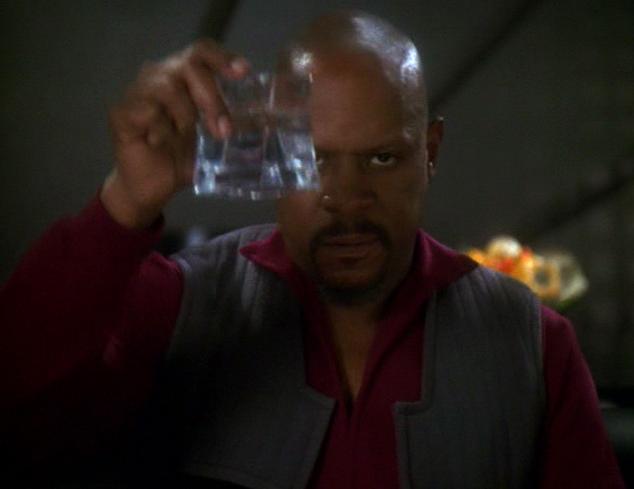
5. Ben Sisko – I love
Captain Sisko. I think he is my favourite of all the captains. Don’t get me
wrong, Kirk and Picard are fantastic, but Sisko was a very different captain,
and it was necessary to keep the franchise fresh. I will admit that I didn’t
always feel this way about Sisko. I thought in the first season and a half that
the character had a lot of growth to do. A good part of it was how the
character was written, a portion due to Avery Brooks trying to find the right
rhythm with him. I would argue that once the writing and the acting meshed together
in the perfect mix, Sisko became the man to look up to and admire. Q visited
the station once, and Sisko knocked him flat on his rear end. I loved that.
Sisko was a diplomat and a soldier. He had honor when dealing with his enemies
(see “Rocks and Shoals” for a prime example). He was fiercely loyal to his
friends and family, devoted to Starfleet, but he also had flaws. Kirk and
Picard were almost too perfect, which is why they are so iconic, but Sisko had
weaknesses that made him more realistic. He was the Emissary of the Prophets
and the Starfleet officer who saved the Alpha Quadrant from the Dominion. He
was a mentor to the first Ferengi in Starfleet and the next incarnations of his
Trill mentor. He made decision on logic and passion. He had pride that
sometimes worked in his favour, but sometimes it led him to make mistakes. In
the episode “In the Pale Moonlight” he showed that he could dirty with the best
of the scoundrels. In “Take Me Out to the Holosuite” he showed he could admit
when he was wrong. Most of all, in my eyes, he was the best father depicted onStar Trek. His relationship with Jake was one of the best relationships in the
show. Look no farther than “The Visitor” for proof. Some may argue that Deep Space
Nine was a long story about Benjamin Sisko. I have no problem with that.
And there you are, my Top
5 Reasons for Loving Deep Space Nine. There are likely many reasons for loving
this show, so please feel free to add your thoughts in the comments. If there
is a special episode you would like me review, feel free to suggest it and I’ll
get to it as soon as I can. Next up, Star Trek Voyager!


